How Algorithms Responsibly Allocate Real Materials to People | Computer Science
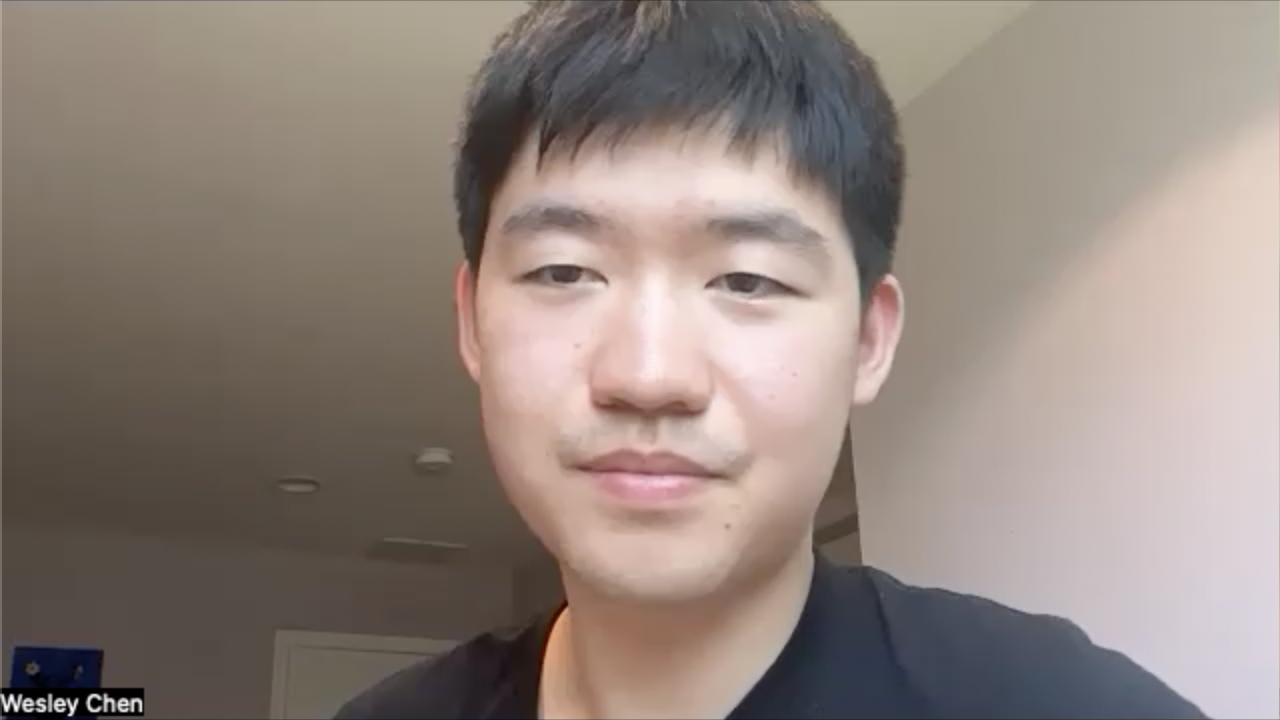
Kathrine
Thank you for joining me today. To start, would you mind introducing yourself, your field, and the main questions your research focuses on?
Professor Biswas
Yeah, sure. Hi, so I'm Arpita Biswas. I am an Assistant Prof of Computer Science at Rutgers University.
I work in the intersection of algorithms, artificial intelligence, and somewhat economics. So my area is known as algorithmic game theory. My research asks questions like, you know, if you're making decisions which involves multiple people, their preferences which might be heterogeneous or different, how can you ensure certain properties in the decisions?
For example, how can you ensure the decisions are fair or the decisions are robust, where fairness should have a way to mathematically express? And robustness is like changing small values or preferences here and there should not change the solution drastically. So how can you make decisions which are fair and robust while being efficient?
That's the main question that my research asks.
Kathrine
Can you walk us through the major decisions in your path from studying computer science to becoming a professor at Rutgers studying like fair AI?
Professor Biswas
Yeah, sure. Let's see. So when I was doing my undergrad studies in computer science, so in general I am always like very excited about problem solving, puzzle solving, and all.
And during my undergrad studies, I realized that I got really excited about algorithms, especially because it gives us like a systematic way to think about problems that you solve even in daily life, like how do you arrange books on a shelf, like maybe you have a thousand books and you want to arrange in alphabetical order. How do you do it efficiently? You can't take forever to do that.
So algorithms gives you a way to kind of understand how do you do certain things in a more efficient way. And I got really fascinated by that. And then I, when I was doing my grad studies, I realized that there is this entire literature, which is called algorithmic game theory.
And it basically deals with situations where you have multiple players or multiple people in the system and each one having their own preferences, requirements, constraints. And then there's an overall objective that maybe you have to allocate resources so that some criteria is maintained and all the people are also happy. So how do you come up or design algorithms that obtain certain objective, also ensure that some properties or some satisfaction criteria is maintained for everyone.
So that is like one of the essence. I'm being very like hand-wavy here, not trying to use any jargon. So this is almost like what algorithmic game theory is about.
And I got really excited in that and I started doing more research in this area. And while working in this area, I realized that algorithmic game theory with computer science is not only about efficiency, it's also about dealing with like making decisions or solving problems, which are in some sense helpful, beneficial. And then with beneficial or helpfulness, it always comes like, is it fair?
Is it going to help somebody? So I think I got like really interested in that fairness or how do the way I call it is coming up with provable properties of what I am generating or developing. And then after, so my PhD was also in algorithmic game theory, especially focused on like fair algorithms for resource allocation, for classification, for recommendation systems.
And then when I moved to Harvard for my postdoc studies, I actually got involved like with non-profits to understand how some of the, understand their problems and how the algorithms that I'm generating is going to help them. And some, I can describe more about the projects, but the projects in general was in healthcare domain or like, you know, how can you help in wildlife conservation, like take some problem there, mathematically express it in a way which you can actually design an algorithm for it and then show that your algorithm has some property. So that's been my journey.
And I have been, ever since I have been more excited in solving problems which have like this, some kind of social impact along with some algorithmic flavor where I can design algorithms for satisfying fairness, robustness, and other meaningful objectives.
Kathrine
So that kind of answers the next question, which is how would you explain what makes an algorithm responsible? So let's move on to, could you walk us through one specific research project that you have worked on or are currently working on?
Professor Biswas
Yeah. So my recent focus has been on algorithms which have like, so when there is this flavor of you have a certain set of resources and there are users who have preferences for these resources and you want to allocate these resources among the users in a way which satisfies some criteria. Now, a very specific problem in this domain is course allocation problems.
So imagine like in universities, every student lists down like a preferred list of courses and some courses are very demanding and every course have a seat capacity. Now imagine everybody gives their preferences and then the university have to decide how to allocate the seats, like who gets what seat. So it need not always be first come first serve.
There could be other angles involved in it. Like it could also be aligned with what is your goal, what is your, like which course will be more aligned to you given the kind of courses you have taken out, given your future goal from this entire course. So taking all of this in account, how can you allocate courses in a way which is in some sense, again, fair, there is a way to show robustness of the selection of the courses that do.
And here when we say fairness, we are trying to think about fairness from the student's perspective that students should not feel like they have not received any of the courses that they gave preference to. So there's some balance between fairness, robustness and also efficiency. So you don't want to keep seats empty.
So you want the courses to have like almost full capacity, as full as possible. So we would allocate courses to students in a way which addresses all of these issues, challenges. So this is like one of the recent projects that I've been working on.
Kathrine
Yeah. So as you mentioned earlier, some of your work also examines how limited healthcare interventions could be distributed. So how do researchers decide what is fair in that situation?
Professor Biswas
Yeah, so that's a good question. What is fair? I think as a computer scientist, I don't think that it's my responsibility to define fairness.
But the way I work in this domain is there are many ways to define what is fair. And some of the definitions you can mathematically express. For the ones which is mathematically expressible, I try to design either solution that helps you guarantee that fairness or I come up with ways to show that there are situations where this fairness can never be achieved.
Now, one particular fairness that you can think about in terms of limited resource allocation is this kind of, there's something called threshold fairness, which means that everybody, let's say, have a threshold in mind, like what I, how much I should have, what I should have received or how much of, what value of resources I should have received. Now, imagine I ask somebody that, okay, if I give you all this resource and you know that there are five people that this resources needs to be divided among, how would you divide it in a way where you get to choose last? So, you divide it the way you want, but you know that you are going to get like the last bundle of whatever you have.
So, ideally, a rational user or a rational player would try to maximize their worst case bundle. So, they will try to put like as much as, like as balanced as possible in all of that so that the minimum value bundle is as high as possible. So, you can think about that as a threshold and say that, okay, that value is something that this person desires and I want to give them some value which is equal to that or more than that.
So, that's one way to define fairness. So, everybody's fair if they feel that they have received something worth what they would have done if they were in charge of dividing everything and they were taking it last. So, that's one way to define fairness.
Kathrine
So, next, you've also studied energy system decarbonization and resilience. So, what kind of decisions can those algorithms help communities, companies, or politicians make?
Professor Biswas
Right. So, even there, so even in climate action space, there is so much interesting questions around how do you incentivize or let's say you have a limit, again, I'm getting into the limited resource, let's say you have a limited budget and you want to use that budget to figure out where do you want to install solar panels in a way to achieve, let's say, something like a minimum number of power outages or reduce the duration of how long power outages happen when some natural disasters happen. So, there's a lot of learning and a lot of estimation from historical data that happens, but even after you have all the estimation, how do you make the decision that, okay, I want to maybe use 30% of my budget to install solar here. And here, what we have to do is we have to make sure that there is some way to assess the usefulness of your decision.
So, one way to say that, okay, I want to install it in a way so that I maximize the total amount of energy generation by solar. But that may not be fair in some sense. Maybe there are some regions that actually require more alternate sources of energy when there are some grid cuts and they have more frequent power outages because of how demographically they are situated.
And maybe solar is going to be really beneficial for them. Then it's not a good idea to assess the total energy generation. You might want to assess what is the benefit of giving 40% of resource here versus not giving it.
So, what is the gap that you're improving? So, that could be an objective which would lead to a more fair outcome because now you're trying to maximize the benefit that somebody gets out of it. So, yeah, so in a climate action space there is a lot of questions regarding how do you do fair allocation of a budget that you have or fair incentivization or what kind of government policies have really helped improve, let's say, carbon dioxide emissions and how those policies should be systematically modified for different countries or states or areas so that overall emissions could be reduced.
Kathrine
Awesome. So, as a professor, what does a typical day look like for you and how's your time divided amongst research, teaching and other activities?
Professor Biswas
Very good question. So, yeah, so the thing is every day is so different. But, of course, there is a pattern that kind of is followed.
I think what happens is typically, so yeah, so typical day. So, days are mostly like I always block like a few hours of only for meetings which is like meeting my students basically and also the collaborators. So, what happens generally is we have to like time management.
I think it's very crucial in the kind of position I have because there's so many hats we have to wear. I have to, as you were mentioning, like we have to do a lot of teaching for the course, students mentoring and the students have a range like PhD students, master's students, undergrad students. And then there's a lot of time that goes in outside the meeting, a lot of time that goes in thinking about the research problems, coming up with solutions, writing proposals or grant proposals for receiving funding so that I can hire more students so that I can buy the resources that are important for conducting the computational work.
Also, collaborating with others. Then if I have a result, most often like there's this like scientific communication is a thing here. So, whenever you have a result, you might want to like present it in places.
So, I get invited by conferences, by other labs, other universities and then there's always like this time for traveling, a presentation and preparing your students to do the same. And I love mentoring. So, I think my favorite part is mentoring students, talking to students because so many interesting ideas emerge from the discussions and I love doing that.
So, I think if I look at my day, most of the time is talking to students, meetings, brainstorming ideas and then some part is about putting more thought into how to make these ideas more concrete. Then some amount for like talking to other collaborators or also figuring out like writing grant proposals, also figuring out like what are the other community in the sense, are there non-profits, are there community services who could benefit from what I'm doing, reaching out to them, figuring out if there's a organic, like a natural collaboration that can happen and talking to them, presenting my ideas in different conferences, giving lectures. I think, yeah. I love that.
Also, reviewing papers. I forgot like reviewing papers also takes up a lot of time. Like all of these conferences get tons of papers and then we as the academic community also do peer reviewing for other work.
So, that also takes up a lot of time.
Kathrine
So, of course, right now a lot of people are still a bit wary about having algorithms make decisions that impact their lives. So, what do you think people most often misunderstand about fairness and responsibility in algorithms or artificial intelligence?
Professor Biswas
What people misunderstand? Like you're talking about how users of AI systems misinterpret the responses or something else.
Kathrine
Or like any negative misconceptions that they could have.
Professor Biswas
Yeah. I mean, often or not, I think what happens when somebody who is not aware of the internal mechanism would use AI as our algorithms as a tool for getting a response. And they always expect it to be like, oh, it has to be 100% correct.
Right. So, I think first misconception is that everything will be 100% correct. That's not, I mean, that would only happen if the claim is that it will be 100% correct.
For example, some of the algorithms that I work on, they don't really consider like any error or stochasticity or any estimation. So, there's no scope of having like, of having a situation which will, which I have not addressed. So, that's why I stress a lot upon provable guarantees.
So, when I have an algorithm and I say that it is fair according to this definition of fairness, I also prove it mathematically to show that whatever is the situation, this will be fair. Or I would come up with a situation where I would say that, see, this kind of fairness can never be maintained no matter what for this situation. So, there's not even like, there will exist no algorithms that can do it.
But in real world, what happens is, especially with AI, you don't want to say no to things. So, you want to give some attempt. So, there are AI solutions where you may not have those guarantees that it will be 100% correct, it will be 100% fair, but they just want to give you some response.
And unless they claim that it's, it could be like, it could be unfair, you cannot like, really expect it to be fair. So, I think the miscommunication that happens is most because of who are the designers who are designing algorithms and AI, they should explicitly say that what it is meant for, what it is not meant for, what should people not expect out of it. And that also gets into this research like fair and transparency responsible AI algorithms result that if you're designing an algorithm, you are responsible to let your users know what not to expect from it and where is the limit of the expectations.
For example, if I design something which is not able to understand a particular language, I should be very clear about it instead of just letting somebody speak in that language and getting some sub-optimal response. I should explicitly say that this has been trained only on English and, you know, any other language will not get like a correct response. So, sometimes those warnings are not included, which creates confusion and which creates dissatisfaction among users also.
Kathrine
Yeah. And finally, what is one realistic step a high school student could take to begin exploring responsible AI algorithms or socially impactful computing?
Professor Biswas
Ah, high school student. Okay. I think the first thing is to even realize that this is an area which is of interest to you and responsible AI is very broad in the sense, if you are interested in just healthcare, you can think about responsibility in that domain, like education, climate change, transportation, pick any topic which is of real interest to you and then think about what are the problems that really concerns you.
Because I think at this point, at this era, at least it's not only about what I can solve, it's about what I can question myself. I think the question, coming up with a good question is very important nowadays. So, if you have an interest in something, first think about what's wrong, what's the thing that you want to change in the way it is being done at this point.
And then you don't have to change it. Just think of what really, like who is getting harmed because of how things are going on? Who is benefiting?
Are the set to whom this is benefiting very different from the set to whom this is actually causing harm? And think about how differently it could have been done. And even the thinking process will help you get a clarity that you are interested in coming up with questions or trying to solve problems that are beneficial to society, that's impacting people in a good way.
And that will naturally tell you like, are you interested in this space and what area more specifically you are interested. And then, so this is one angle of it. I think the other angle is the ground level knowledge base about computer science, about algorithms, about you know, like mathematically how you express a real world situation.
All of that will help you achieve what you want to achieve in terms of the problems that you're interested in. And this tools will give you the technology or the way to solve them. So I think parallelly students should focus on both of this.
Like what am I interested in? Where my heart lies? It's also about passion.
You have to be passionate about what you're doing and then think about what do I need to learn? How do I increase my knowledge base so that I can really put an impact in what I'm interested in?
Kathrine
All right, thank you. That is a great place to end. Thank you so much for sharing your work and your advice with me.
I really appreciate your time and I think students will learn a lot from hearing your perspective about your field. I'm glad. I was like, it was very refreshing to have this kind of a conversation.