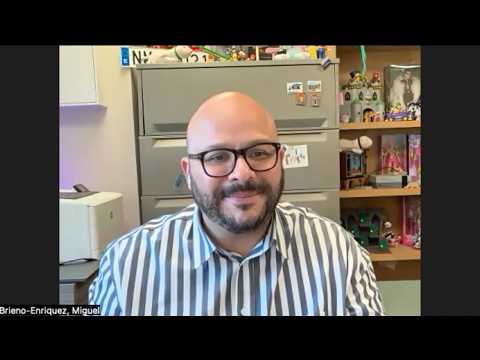
Professor Sunderland on Fire Protection Engineering, Flames in Microgravity, and Cool Flames
Kathrine
Thank you for joining me today. To start, would you mind introducing yourself and the main problems that your field focuses on?
Professor Sunderland
Yes, hello, I'm Peter Sunderland. I'm Professor of Fire Protection Engineering at the University of Maryland. And my field focuses on anything that can protect people and property from the effects of fire.
Fire is a really big problem just in the United States. We have 4,000 deaths per year on average from fire and also $15 billion in property damage. So it's a big problem.
You can imagine even bigger globally. And as big of a problem as it is, we keep having emerging threats in fire, like data centers are a huge problem when there's a fire. They have lots of batteries and electronic and high voltage equipment.
Also, WUI fires, wild and urban interface fires, forest fires and interact with communities are a huge problem with huge losses and battery fires. So there's a lot going on in the field. It's an exciting time to be a fire protection engineer.
Kathrine
So your work on combustion and fire research is also combined with mechanical and aerospace engineering. So how do those different disciplines overlap?
Professor Sunderland
The common element there is the thermosciences. So thermodynamics, which is usually a sophomore class and then fluid mechanics and heat transfer, which are usually taken in a junior year of an engineering program. And so all those departments, fire protection engineering, aerospace engineering, mechanical engineering, they all require those three courses.
And I was an undergraduate at Cornell University. My fluid mechanics instructor was amazing. He was like a genius, didn't ever bring any notes to class and he would just get up and drive this amazing, beautiful math.
And for me, the idea that this fluid is this thing, it's kind of like a blob of mass that interacts with itself, both at the speed of sound and sometimes as slow as a snail, just got me really hooked. And ever since then, I've been interested in those thermosciences.
Kathrine
That's really neat. So next, could you walk us through one specific research problem that you are currently working on?
Professor Sunderland
So what we're doing now that I'm very excited about, I have one student here working on it, is using color cameras. So a little fancier than a cell phone camera, but basically that same idea, to take images, usually still images, but maybe even videos of a fire, and to be able to measure the temperature and the fire size and the radiative emissions, all from looking at the colors and the sizes of the flames and the embers. And so this is a tremendous increase, advance until now people had to use thermal imaging cameras for this, like the kind of cameras that firefighters use that cost two or $3,000 and they measured the thermal field.
Now we're starting to be able to do that with cameras with silicone chips, which are much less expensive. And if you think about California, they have 1200 mountain top cameras. These are just color cameras that are panning around every two minutes.
They take a picture of the entire horizon and they're using AI, which I think is great, to look for fires and look for smoke. These mountain type cameras are primarily for fire and smoke, but I think we can do better. I think with the technology that we're developing, we could improve the detection and the early response to fires.
Kathrine
So other than the color camera, what kind of tools or equipment are researchers using to study fire?
Professor Sunderland
The amazing thing about fire is that it spans from the very small, like some particles that might be 20 or 30 nanometers, which we look at with electron microscopes, all the way up to global planet scale that we look at with satellites. And so there's everything in between. Now, you can imagine burning an oil well fire or a big forest fire.
It's hard to look at that and make a lot of sense out of it because it's so big. They're from very tiny scales, like a pine needle, all the way up to the full size of the flame. So in our department, we don't have a very large region to burn.
We can burn something the size of a Christmas tree, but that's perfect for us. I love looking at flames the size of a candle flame or maybe the size of a cantaloupe. Small flames are easier to do the kind of diagnostics that we like to do.
But other people do look at large fires and some people are using electron microscopy and atomic force microscopy, all kinds of lasers. So you name it, any diagnostic that's used in any other field in engineering is also being used in fire. And we also have in our field and in our department, very advanced fire modeling capabilities, computer models of these fires.
Kathrine
So I'm curious, how do these small models, like the candle size that you mentioned or even cantaloupe, translate to like the kind of bigger fires that you might see out in the wild?
Professor Sunderland
Well, we can learn a lot about the chemistry and the chemistry in fires is different. And it's not like the chemistry that you have in your body or that you might see in a chemistry class. At these temperatures, the chemical processes are happening very fast.
And so if we can study them in something the size of a candle flame, usually you can plug that into a model that then can analyze a bigger fire like a wildland fire or the fire in your car engine. So chemistry is one thing, also the radiation, the emissions, whether a fire is producing carbon monoxide, which kills more people than the flames or producing a lot of soot, which is also a very toxic product. Those kinds of things we can do at small scale.
Kathrine
So next, some of your research studies flames in microgravity. So why do scientists study fire in space and how does it behave differently without normal gravity?
Professor Sunderland
So I used to work at NASA and you would see the astronauts, they go through so much training. But when my colleagues would come in and talk about fire, they were on the edge of their seat. They wanted to know everything about the fire risk and also our fire experiments.
And we know even from Apollo 13 that in space and spacecraft, even a small fire that wasn't that big of a fire can have tremendous consequences. Spacecraft, human occupied spacecraft are purely stranded in place. There's no, you can't call 9-1-1, no one's coming to save you.
They do often have supply ships that they can get into and escape, but really it's a defend in place environment. So we need to be extremely careful with the space environment for fire and even unmanned space, it can cost billions of dollars if you have a fire on an unmanned spacecraft. Now fires burn very differently in microgravity because there's no buoyancy.
And so a candle flame, instead of being tall and pointy because of the hot gas rising, it becomes a hemisphere. Instead of being yellow with a lot of soot inside, it becomes blue. So everything is different in that environment.
And it's been a tremendous asset to scientists to understand, to explore regimes of burning and physics that we can't access on earth.
Kathrine
That's really neat. So your work has also involved cool flames. So what exactly is a cool flame and why is it scientifically or practically important?
Professor Sunderland
So a typical hot flame, a typical flame, like a candle flame has a peak temperature around 2000 Kelvins. Cool flames have much lower temperatures as low as 750 Kelvins. So in auto engines, cool flames can be extremely important.
And by exploiting this cool flame chemistry, you actually ignite a cool flame at this low temperature that really speeds up the reaction and then has a very complete burn of the hot flame phase. And now engine makers are trying to exploit these cool flames and get engines that can increase the thermal efficiency from 35% on current cars, all the way up to 60%. So cool flames, they're not clean, they're cold.
If you burn them by themselves, they make formaldehyde and they stink. But if you can get them to work and to be controlled in the engine, now they are hard to control, then we can see tremendous gains in efficiency. And this is one reason that we're studying these cool flames.
Now, they also, we believe, have application to fires because that temperature range is really close to the temperature range of smoldering. And so if a pile of firebrands lands on your porch and you live in California, Oregon, somewhere in the WUI, the wild land urban interface, those firebrands can smolder for a long time. It's not really that much of a concern, smoldering firebrands, it would take weeks or months to burn down your house.
But if they transition to flaming, now your house can be lost in a matter of hours and there's no one there to fight the fire. So we're looking at the possibility that cool flames and that low temperature chemistry is important in that transition from smoldering to flaming in biomass fires.
Kathrine
So that transitions nicely to the next question, which is that your research also includes firebrands, aka these windblown embers from wildfires. So why are these small embers so dangerous and how can engineering protect buildings from them?
Professor Sunderland
So this is another new problem, which is part of why fire protection engineering is so exciting. People used to think, you know, 20 years ago that when the fire burned in the forest and there's a house, that the radiation from the flames would heat the house until it started to smolder. And then the flames would directly impinge on the house and burn the house.
Now we know that that might be responsible for half or probably even less of the houses that are lost in wildland urban interface fires. And so it turns out at least half, probably more, are destroyed by these firebrands. As I mentioned, they land often on your deck or your roof and the gutters.
Because of turbulent eddies, they tend to accumulate and pile up like a pile of leaves in the fall in your lawn. And then they have enough critical mass to start eating away and smoldering the substrate, the deck or your roof, until that transitions to flaming. And so firebrands really are an emerging science and important thing to understand and to protect against.
Kathrine
So what parts of a building are typically most vulnerable to firebrands?
Professor Sunderland
Well, California is doing a great job with their regulations on requiring, for example, with vented attics to put good screens up there so the firebrands can't blow in. And attic vents are designed to allow wind to blow through and cool down your attic. But the last thing you want is a whole bunch of firebrands landing inside your house, where you have who knows boxes stored up there or carpet or whatnot.
So now California is requiring screens on these attic vents for new construction. They're also requiring clearing around the house and having no mulch near the house, having something non-combustible for the first few meters near your house. And encouraging people to really clean out your dead leaves, clean out your dead branches and protect your house.
And it turns out that this does make a big difference. There are lots of things we can do to protect those houses.
Kathrine
Next, so in previous years, asbestos has been a really popular material in fire protection engineering. So now because of the more documented health risks of asbestos, what kind of materials are engineers like moving on to?
Professor Sunderland
I think we're moving over to things like drywall and cement and other ceramic materials that are completely non-flammable.
Kathrine
Cool. So next, what do students in fire protection engineering actually study and what kind of careers could the major lead to?
Professor Sunderland
Okay. So our students, we have a four-year degree. It leads to a bachelor of science in fire protection engineering.
We're really the only one in the United States with an accredited program in fire protection engineering. And they basically have two kinds of courses. One kind of course, it's not really a track, but it's kind of like a track is the thermal sciences.
So the fluid mechanics, heat transfer, fire dynamics, and fire modeling. And the other cluster of classes that they take are more of the design classes. So things like sprinkler design, fire alarm design, and human behavior, design of buildings for human behavior.
And so these are the two main types of classes that they take. And then I think you also asked what kind of employment they might get after. So probably about half of our graduates after the bachelor's degree, they go and they work for consulting engineers.
And then they design these fire alarms and these sprinkler systems and the egress systems. And they design these buildings. And some of them have really exciting jobs where they'll go into an existing building like a Smithsonian museum and try to improve the fire safety of that occupancy or aircraft hangars or prisons and hospitals.
There are very many high challenge, high difficult fire protection engineering applications. And our students really, our alums now, are really leading the industry in terms of improving that fire safety. And then a lot of our students also, they will go for advanced degrees, either a master's or a PhD, and they may go into research, they may go into education or fire investigation, expert testimony, those types of things.
Kathrine
So what kind of student would you say tends to enjoy this major? For example, are they more hands-on or is it more like coding at a desk?
Professor Sunderland
That's a great question. Fire protection engineering is more hands-on. And you see a lot of our fire protection engineers wearing a hard hat and going to a building construction zone and making sure that the sprinklers are installed right and the fire protection systems are all installed right.
So it does involve some desk work, like I think all engineering jobs, but also more travel and inspections. Of course, after a fire, if they go and inspect a fire, that's very hands-on. I think the future of our discipline and probably all disciplines is gonna be more and more computer modeling, AI and desk computer work, but there's a nice mix with fire protection engineering.
I think that most of our students are the ones that got lucky and they found out about it. So many students, they come here for a few years and they're like, well, fire protection engineering, that's actually a degree. And then often they'll say, I wish I had done that.
Some of the other programs are so overcrowded. It's hard to register for classes. It's almost getting hard to finish in four years, but in fire protection engineering, it's a well-kept secret.
We're trying to get the word out more. And usually once people hear about it, if it's early enough, like in high school in our first couple of years, they'll be very happy on our degree. Get to do a lot of desk work, computer work and theory, but also some good hands-on work as well.
Kathrine
So next, what does a typical day look like for you as a professor, a researcher and also director of undergraduate studies?
Professor Sunderland
I think being an engineering professor is one of the best jobs in the world. So you come to work and most of my responsibility, what the university wants at a research one university is a faculty with an active research program. And so that's really equal hand in hand with education.
And so I come to work and I try to solve problems and you don't wanna solve a problem someone else has done or just repeat something else. It's always about studying mother nature, discovering something new and doing that with your graduate students. So that part is super rewarding.
And then the other half of the job is instruction and education. And that too is super rewarding. Trying just once every five or 10 years to have a light bulb go off in one of my students the way it did for me when I took that fluid mechanics class at Cornell.
That's what really gets you out of bed in the morning, gets you excited to come to work, to try to share that passion for the math and science with the students and get them hooked on it the way that I got hooked at Cornell.
Kathrine
So how can interested high school students safely and realistically explore fire protection engineering or combustion science?
Professor Sunderland
So I wanna say that our department has lots of open houses and let's see, we have shadow programs. They can come on tours and visit our department but we do have online information sessions. And so they can write to me pbs.umd.edu or the general email enfp.umd.edu and we'll get them hooked up with all the right information. We even have (occasionally) research experience for high school students. Probably it's best if they live close but we've even done some that are remote. I have a high school student right now working with me that I haven't even met in person just on Zoom.
And so we offer research experience for high school students, people who are interested in this. So those are good ways to get involved. And I would say if you're a high school student don't be shy, you just gotta send the email and we love hearing from you and we'll do our best to try to hook you up with whatever needs you might have.
We even sometimes have our advisors do transcript reviews for high school students to help them with the admissions process.
Kathrine
And finally, what high school classes would you say are the most useful preparation for someone who's interested in this major?
Professor Sunderland
I would say probably your math classes, your science classes. So pre-calculus, calculus are really important for getting admitted to engineering school. Some chemistry and physics helps.
So maybe some outside projects, Lego projects, any kind of programming is really good. Writing is important. I think really history, all those things are great to help you understand how to make sense of the world and how to explain your thoughts.
But certainly it's the math that probably counts the most. And when I was in high school, I loved that math stuff. And that's the common interest we see in our students that they're all fans of math.
Kathrine
All right, so that is all my questions and also a nice place to end. Thank you so much for sharing your work and advice with me. I really appreciate that you took the time to do this.
And I think students will hear a lot from hearing your perspective on fire protection engineering and combustion research.
Professor Sunderland
Well, thank you so much, Kathrine. It was a pleasure.
Kathrine
Thank you.