Professor Wu on Cancer Research, Integrin Signaling, Protein Crystallization, and Research Skills
Could you introduce yourself and your field of research?
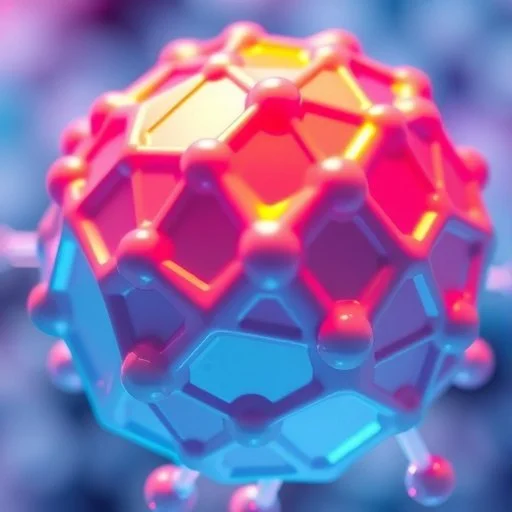
I am a professor at Fox Chase Cancer Center. My laboratory studies how human cells communicate with and respond to their environment. One of the major systems we investigate is called integrin signaling. Integrins are proteins on the surface of cells. You can think of them as "molecular hands” that allow cells to attach to their surroundings and send signals back and forth. We are interested in understanding how these molecular interactions influence important biological processes such as immunity, blood clotting, tissue repair, and cancer progression. By learning how these signaling systems work at the molecular level, we hope to identify new strategies for developing therapies that can strengthen the immune system's ability to fight cancer or prevent cancer cells from spreading to other part of the body.
What first sparked your interest in biology and scientific research?
I don't remember many of the words my Ph.D. mentor said, but I still remember one sentence very clearly: "Scientific research is like getting paid to do things you love to do." There are very few careers like this, if any. You spend your days asking questions, solving puzzles, and exploring ideas that genuinely interest you. At the same time, the answers you discover can make a real difference in the world. As a student, I enjoyed subjects like mathematics and physics because they involve solving problems logically and systematically. What drew me to biology was the realization that it brings together many different ways of thinking. Biology gave me the opportunity to apply those same analytical skills to questions that have a direct impact on human health. What really excited me was realizing that the things we learn in the classroom can eventually help people in real life. I loved the challenge of solving difficult problems, but I also liked the idea that those solutions might one day make someone's life better.
How did your path develop from being a student to leading a cancer research laboratory?
I think it is important to have an honest understanding of your own strengths. If you find that you have a particular talent in a certain area, it makes sense to invest more effort in developing that potential. For me, I found that I was suited to STEM subjects, so I naturally pursued opportunities that allowed me to develop those strengths. As my training progressed, I gradually developed the skills needed to become an independent scientist—learning how to ask important questions, design experiments, mentor students, and manage a research team. By the time my scientific ideas and experience had matured, leading my own laboratory felt like a natural next step rather than a dramatic leap. In many ways, my career has been shaped by recognizing my strengths, working consistently to improve them, and allowing those incremental efforts to accumulate over time. I don't know if there were any turning points, but I do think persistence is an important stepping stone to success.
Can you tell me about the research that your lab is doing?
Our laboratory investigates how proteins inside cells or on cell surface interact with one another to control cell behavior. We are particularly interested in how immune cells recognize and attack cancer cells, and how cancer cells move and spread throughout the body. To study these questions, we use a combination of approaches. We produce proteins in the laboratory, determine their 3D structures using X-ray crystallography, NMR, and other structural biology techniques, and perform biochemical experiments to measure how strongly different molecules interact. We also use computational approaches, including AI, to analyze biological data, predict molecular structures, and identify promising strategies for therapeutic development. Moreover, we work with cultured cells to understand how these molecular events affect real cellular functions, such as immune cell activity. The equipment in our laboratory ranges from instruments used to purify proteins to specialized systems that allow us to visualize molecular structures and monitor how cells behave over time. By connecting molecular details with cellular outcomes, we hope to uncover new opportunities for therapeutic intervention.
Can you tell us about a moment where you got an unexpected result in the lab?
One moment I still remember clearly involved growing protein crystals for structural studies. Crystallization is often a game of patience and luck—it can take days or weeks, and usually requires a lot of trial and error. In this case, we had spent a long time preparing a protein that turned out to be very unstable. It seemed like it was about to degrade or clump together, so we decided to set up the crystallization experiment right away and hope for the best. To our surprise, crystals appeared within an hour. We were convinced they couldn't possibly be the right ones because we hadn't optimized anything yet. But after checking them carefully, we realized they were exactly what we needed and ultimately led to an excellent structure. Moments like this are rare, but they are unforgettable. It felt a little bit like winning the lottery, and it's one of the reasons research remains so exciting to me.
What does a typical day in your life as a professor and researcher look like?
A lot of my time is spent discussing experiments with students and postdoctoral researchers, analyzing results, and designing the next set of experiments. I also spend a significant amount of time writing scientific papers and grant applications. Of course, there are also administrative responsibilities that come with running a laboratory. Overall, research is not the kind of work where there often is a deadline every week/month. Many projects develop over months or even years, which gives you a certain degree of flexibility in how you organize your time.
What skills do you think students should build if they want to become a researcher in the future?
Beyond qualities such as curiosity, resilience, and critical thinking that are often associated with scientists, I think two additional skills, analytical skills and communication skills, are becoming increasingly important for future researchers. The first is the ability to analyze results independently. Experiments do not come with answer keys, so students need to learn how to interpret data, identify patterns, and decide what questions to ask next. The second is communication. Science is highly collaborative, and researchers need to communicate effectively with mentors, colleagues, and eventually their own students. Communication is essential for learning new techniques, building collaborations, and sharing ideas. I also believe that learning how to interact productively with AI tools will become an important part of communication. AI can help us challenge our assumptions, validate our thinking, and sometimes inspire new ideas. The value you gain depends on the quality of the questions you ask and your ability to critically evaluate the answers.
What is one small step a high school student could take to learn more about your field?
Choose a specific disease, especially a rare disease, that interests you. Learn what causes it, what treatments currently exist, and what questions remain unanswered. If there is no treatment, ask why. If there is one, think about how it could be improved. That's often where scientific research starts.