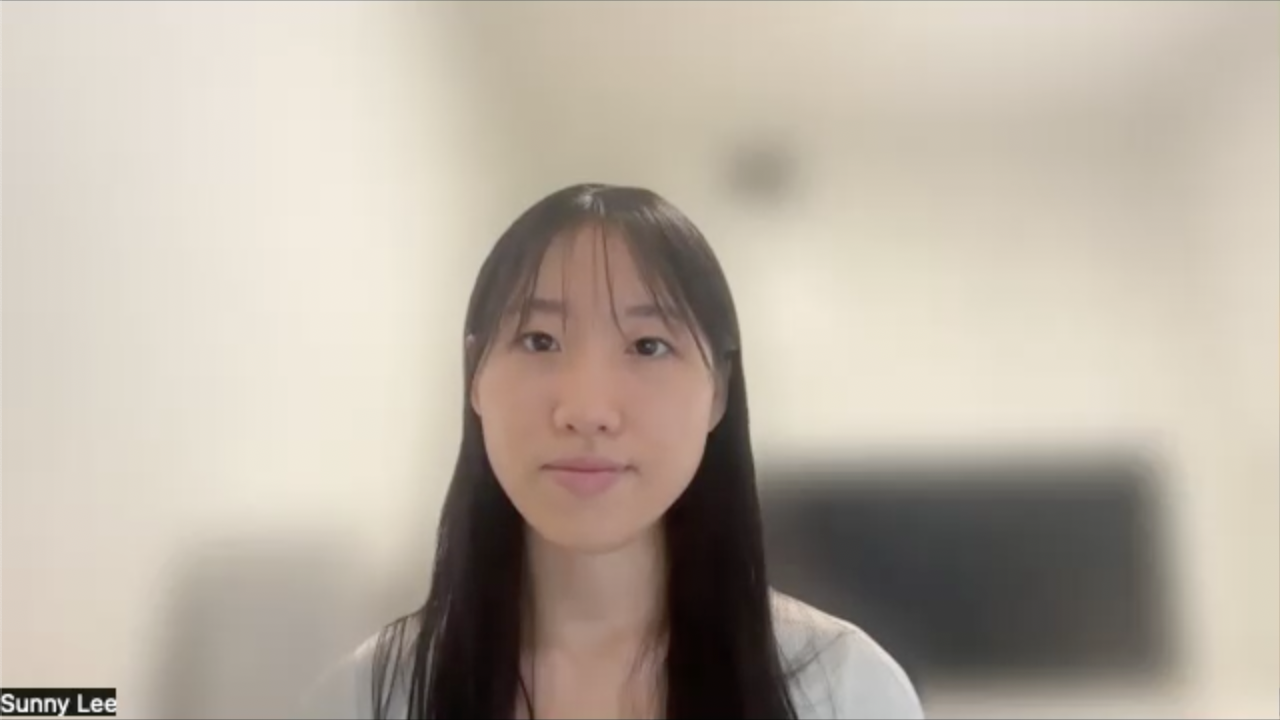
Professor Zhou on Quantum Materials, Scientific Research, and the Path to Becoming a Professor
Kathrine
Thank you for joining me today. To start, would you mind introducing yourself, your field, and the main questions that your research group studies?
Professor Zhou
Yeah, sure, absolutely. So my name is You. I'm an Associate Professor in the Department of Material Science and Engineering at the University of Maryland in College Park.
So my lab, we run an experimental group, so we work on mostly experimental material science and primarily looking at what are the electronic and optical properties of certain materials. So we are interested in, in particular, what happens when you have materials that are just a few atomic layers thick. These are essentially the ultimate, thinnest materials you can, human can make.
So we ask the question, what are some interesting properties you can create? And what are some useful applications you can envision once you have these materials and interesting properties? Yeah, so we work on both electronics and also optics with these materials.
Kathrine
That's super cool. So thinking back, what first made science or engineering really interesting to you?
Professor Zhou
Yeah, so that's a good question. So I think I developed my interest in science in a pretty young age. So when I was a kid, I liked playing with the wires and light bulbs with batteries.
I would take out the batteries and put a wire and connect them to a light bulb from a flashlight and see it lighting it up. So in general, I think it was driven by my curiosity. So I was curious about different things, also about animals and cars and all sorts of different things.
But I think what really piqued my interest was kind of seeing some, like make some, made some discoveries. For example, when I actually connected the wires to the battery, and I accidentally put it close to a compass, I see actually the direction of the compass is actually moving by, of course, I didn't know it was the current, by the current that was flowing in the wires. And then, because of this interest, I read more about this phenomenon.
Of course, people have discovered it a long time ago. But the joy of discovering some interesting phenomenon, some unexpected, and at that time, unintuitive phenomenon really sparked my interest. Yes, I would say that I became quite interested in STEM at a quite early age.
But at that point, I actually didn't know that this thing is called physics. I had no concept of physics whatsoever until I entered middle school to actually take physics classes. But I think the interest in science and nature was from quite early, early years.
Kathrine
So next, can you walk us through your path from university to becoming a professor and leading your own research group?
Professor Zhou
Yeah, yeah, absolutely. Yeah. So so in high school, I, like, I haven't decided what major I would take in college, right?
So in general, I'm interested in science, but also math, not so much in the biology, but I'm also interested in history and other stuff. So it was kind of by accident that I got admitted into a physics program because I did well in the physics, like, Olympiad exam. So that was kind of by accident.
But after entering the college, I began to think more about what I want to do later in life, right? Of course, with a physics degree, you can do a lot of different things. So in different areas, some may not be directly related to physics.
But the way I thought about it was that I wanted to do something that I can have a practical application. So not just looking at, for example, the particle physics, which is already very interesting, but I want to be able to build something that we can actually use in daily lives. So that's why, of course, it takes quite a while to figure out what my exact interest was.
But after a few years, I figured out studying how materials work, how the electronics or computers work at a fundamental physics level was my interest. So I decided to do a PhD in this related field to further my knowledge and gain more experience. So that's why I applied to a PhD program.
And so I did my bachelor degree in China, but the US was at that time the best for fundamental research. So I applied for different schools in the US, but mostly in this field called condensed matter physics, essentially just studying how solid materials behave. These are mostly connected to our daily lives.
So I chose to study a material that shows so-called metal insulator phase transitions, so they can switch between metal and insulator. And that really piqued my interest because you can think about many different applications if you can switch the material from a conductive to a non-conductive state. So I did a lot of material growth, like fabricating these materials and then studying their electronic properties.
And once you finish your PhD or during the PhD, you think about what's the next step, right? So I found that I really enjoyed doing research in the lab, doing hands-on work. So I want to do under the, similar to what I experienced as a child, the joy of discovering something, whether it's new or not.
It's really exciting. It really excites me. So I decided to, that I want to do a research, become a researcher, either in like a university or in national labs to continue my scientific journey.
And the natural way to do that is to do a postdoc and then look for jobs in academia. So for my postdoc, I decided to switch to a different topic, looking at optical properties at that time, very new material. These are like, as I mentioned, atomically thin materials.
So these were a very new class of material. People didn't really understand them very well. So I chose to study these materials and also learn about this new material, also learn about new techniques, which is optics, which I had no experience about.
So it's a bit of a risky bet, but in the end, it worked out well. So, and yeah, and then finally I decided to apply and see where is, go to positions. So yeah.
And being here at UMD. So that's kind of a long trajectory. Yeah.
Kathrine
Wow. I mean, I was really interested when you said that you kind of accidentally, like ended up majoring in physics and like that kind of became your entire career. So interesting how things can happen.
Professor Zhou
Yes, yes. It was accident because I was pretty good at math and physics. And I, myself at that point at high school, I didn't really like know which major I would choose, but it was kind of by accident that I did really well in physics, like Olympiad.
I didn't expect to do well actually. So yeah. So it was like a first, yeah.
So it was like an interesting coincidence. Yeah.
Kathrine
So as you mentioned before, you study materials that can only be a few atoms thick. What makes these materials unusual and what are scientists hoping to understand or control?
Professor Zhou
Yes. So that's a great question, right? So, so, you know, like quantum mechanics deals with essentially materials, when materials or an object become very small.
In this microscopic world, everything behaves very differently from like classical objects, right? So if you think of an electron as a ball, it's actually very different from a ball that I can kick. So if you can create materials that are just a few atomic layers thick, these quantum phenomena become very important because you are essentially just confining or putting these electrons into a very small confined space.
So from a fundamental perspective, this is a relatively new regime for scientists to study the behaviors of electrons and also other type of particles when it's put into this very small dimensions. So there has been a lot of exciting discoveries in the so-called two-dimensional electron systems and now two-dimensional materials. So just many interesting physics can happen when you have these small systems.
And from a practical or more application point of view, so if we think about our computer chips, they are made of transistors. So the reason why we are getting better and better computers or CPUs is because we can make smaller and smaller transistors. So the smaller transistor you make, you can put more of them on a single chip.
So you can also make them switch at a faster speed and they can also have less energy per transistor to switch. So this leads to more computing power and this leads to a lot of like exploit for propulsion in current AI system. We all rely on this higher computing power.
But ultimately, if we want to shrink this transistor, eventually it will be atomic scales. Right now it's already a few nanometers, which is tens of atoms, but eventually you will make them into just a few atoms. So studying the material, how materials and electrons behave when you have just a few atoms, essentially will inform us what happens when we build these smaller and smaller devices where the quantum mechanical effects become more and more important.
So that's from the application point of view. So it's a very interesting system to study as well because potentially it tells you what are the things to pay attention to when you build these small devices.
Kathrine
So what specific research project is your group working on right now and what are you trying to discover?
Professor Zhou
Yeah, great. That's a great question. So we are actually looking for some new electronic phases in these two-dimensional materials and also so-called two exciton phases.
So essentially just like water, you can have different phases, right? You can have water, you can have gas, you can also have ice. If you have some particles inside these 2D materials, whether it's electrons or other type of excitations, you can form different phases.
So what we are trying to study is how can we engineer the material structure itself to stabilize these phases. So one of the interesting things you can do with atomically thin materials is that you can put, because they are essentially layered materials and they are atomically thin, you can think about them as atomically thin Legos, right? You can have different colors with different functionality and assemble them into a rather complicated stack to realize new functionality and the new phases of electrons.
So that's essentially what my lab is currently doing. We would actually make these two-dimensional materials and depending on what we are looking for, assemble them into this atomic scale Lego and then we study their properties. And we do this iteratively, right?
So if we discover some interesting electronic properties, we think about how we can rearrange the structure, the Lego structure, so that we can perhaps realize a better performance from these atomic Legos. So that's kind of the thing we are trying to do.
Kathrine
Could you walk us through one completed experiment or discovery from your research?
Professor Zhou
Yes, absolutely. So one of the surprising things we discovered is that in these two-dimensional semiconductors, you can realize essentially an electron crystal. So typically, when we talk about crystals, we talk about crystals formed by atoms, right?
So if you look at inside the crystal, these atoms are periodically positioned in this three-dimensional space into a regular structure. So that's the atomic crystal. It turns out that about 90 years ago, quite a famous physicist called Eugene Wigner, he predicted that if you have electrons inside a material, they can also form a crystal that's an electron crystal, right?
So you imagine a bunch of electrons inside the material, they can form a regular lattice that's independent of the atomic lattice. So it was a very exotic phase because here the electron will be just moving around. They behave more like a fluid or a gas, but now you can form this crystal.
So people have been trying to look for these crystals, but it has been very challenging to realize them in real materials. So there has been essentially less than a handful of experiment or material system that you can realize this. The problem is that because these electron crystals are very fragile, right?
If you have an atomic crystal, you can melt it by warming it up, right? So the temperature can destroy it. You can destroy the electron crystal also by warming it up.
But it turns out what's more interesting is that you can also destroy it by quantum mechanical effects. So in quantum mechanics, there is this principle called the uncertainty principle. So whenever you try to confine an electron, the electron will begin to move around.
The tighter you confine it, the more movement you would get. So when you try to create a crystal, you are essentially trying to put this electron into a local space, but then the quantum mechanics will tell it to move around. So essentially this quantum mechanical effect destroys your original crystal, this electron crystallization.
So it turns out that you can actually, what we found is that in this 2D materials, you can actually realize this electron crystals. So not only stabilize this crystal against this thermal effects, but also against this quantum mechanical effects. And we can even study how this so-called quantum phase transition.
So essentially this quantum mechanical effects, how does it melt the crystal? So studying not only the thermal melting of the crystal, but also the quantum melting of the crystal. So this opens up a lot of new directions to look into how does this phase transition happen in a non-classical fashion.
So yeah, so that's kind of the project that we are still working on. So we have discovered this new phase probably five years ago, but we have still ongoing experiments studying these phases through different aspects.
Kathrine
That's incredibly cool. So you just talked a little bit about your research and now moving on from your research to like your everyday life, what does a typical day look like for you and how's your time divided between teaching, meetings, writing and lab work?
Professor Zhou
Yeah, so that varies a lot day by day and also like month by month, probably week by week, because like during the semester I would spend more time teaching, but now during the summer I spend more time doing research. So it changes a lot. But in general, I spend a lot of time like working with students.
So students, they work in the lab, they come up with some issues. So I try to work with them to troubleshoot what's the issue. And when they make the observation, we try to see what's the origin of this observation.
We try to understand what's the meaning of the experiments and also try to understand is there any novelty to it. Has people seen it? Or if people have seen it, are we discovering some new aspect out of these experimental observations?
So a lot of times, a lot of my time is spent working with students. And that's the fun part, I'd say, like working with students. And also, sometimes I also spend a lot of time doing administrative work, so it's kind of random.
But yeah, so there is no fixed amount of time. I think that's one of the things for academia is like you have a large degree of freedom in assigning your own time. You can choose to work on the things that you care most about.
So this academic freedom is something I really enjoy.
Kathrine
Next, what misconceptions in your experience do you think people frequently have about material science, quantum physics, or scientific research in general?
Professor Zhou
Yeah, so that's a great question. So I think like there are two things, misconceptions. One is that people think that physics is hard.
Like I talk with a lot of people when I'm at meeting, like just in daily life, they always think physics is hard. I think that the physics is one way that we try to explain the world. And if you follow the logic, it's actually quite clear.
So I think the most important part is not the mathematic part, but the logic part. So if you understand the logic behind it, physics is actually not that hard. I think the key is to recognize that physics is an experimental subject.
So what we believe in a theory, we need to put it to an experimental test. And when the experimental test doesn't agree with our theory or with our intuition, we need to modify our intuition. I think a lot of times, if we stick to the intuition we have and not be closed-minded, we may think that it's hard.
But if you develop open-mindedness to new possibilities and you are open to change your mind on something, by changing the way you think about the world, I think the physics problem becomes easier. I think a lot of the challenges is associated with thinking about the problem in a different fashion rather than the math. And related to that, I would think that another misconception is that a lot of the scientific discoveries were well-planned.
People have a clear idea of what they are looking for. A lot of times I think that's true, but also for a large portion of scientific discovery didn't come from well-planned. Of course, to begin with, you need to have a good plan to study what things you are looking for.
But a lot of times, the thing that you are looking for is not the thing that you find in the end. And it's this unexpected part of the scientific discovery that's perhaps not very well documented and leads to some misconceptions. So I see that students sometimes get frustrated when experiments did not go well.
That's actually a common mode of the operation. Most of the time, you are not working a perfect world. Everything would just work.
Sometimes, if you pay attention to what actually did not work, you will find something that's new. Basically, understanding what's the thing that stops you from getting the results you want. I think that's another misconception I sometimes see.
Kathrine
So next, in your career, you've been recognized with many awards, such as the NSF Career Award, DOE Early Career Award, or Forbes 30 Under 30. Could you walk us through the specific work and period of your life that led to one of those awards?
Professor Zhou
Yeah, sure. I can talk about the NSF Career Award and the DOE Career Award. These were awarded around the same time, when I was just beginning my career at UMD.
I just started my lab and began to set up the lab, and I just recruited my first batch of students. We just had the discovery of these Wigner crystals in two-dimensional materials. We were very excited about these new results, and we had some ideas of some new directions that we can pursue.
We worked really hard to get some preliminary data to show that, indeed, these directions are promising. I think the scientific community were actually also appreciating the fact that we are seeing these states, so I appreciate that we got the recognition. Then we tried to formulate a series of experiments to be done in the next few years, and really asked the question, what are the main scientific questions we can address with these experiments?
With these plans and proposals, we were able to secure research support from DOE and NSF. These were really helpful because now they were four or five years, which gives us a lot of freedom to choose the most important scientific questions that we want to pursue. It allowed us to really delve into this curiosity-driven research, so it has been wonderful with this support.
Kathrine
That's really incredible. Lastly, what is one realistic step a high school student could take this month to explore material science or quantum technology?
Professor Zhou
Yes, that's a great question. I think one thing you can consider is to pick one thing that interests you. If you are interested in photography, look into how camera works, how does the lens work, how does the sensor work.
If you are interested in computers, look at how, for example, how the display works, how does the CPU and GPU work. If you're interested in cars, look at how the manufacturing of these cars works, how metal works. Ask the question, what kind of materials are used in these technologies?
You can go a bit deeper. What are the most important properties for these materials and how do we understand the fundamental properties of these materials? Just keep asking questions and pick the the thing that interests you most and keep asking questions.
You'll find that after asking these questions a few times, every time you ask a deeper and deeper question, pretty quickly you will be actually already at the frontier of human knowledge. There's already something that we don't know and this is how actually our scientists help to frame their research. Our scientists are trying to expand the human knowledge by discovering something new.
This is a practice that helps you to actually develop this way of thinking and also perhaps you'll find something that will interest you in later life.
Kathrine
Great, so that's all my questions. Thank you so much for taking the time to share your experiences. I really appreciate it.
Professor Zhou
Absolutely, it's my pleasure.
Kathrine
Thank you.