UPenn Material Science Engineering Major Emily
Kathrine
Thank you for joining me today. Would you mind introducing yourself and telling me about what you study?
Emily
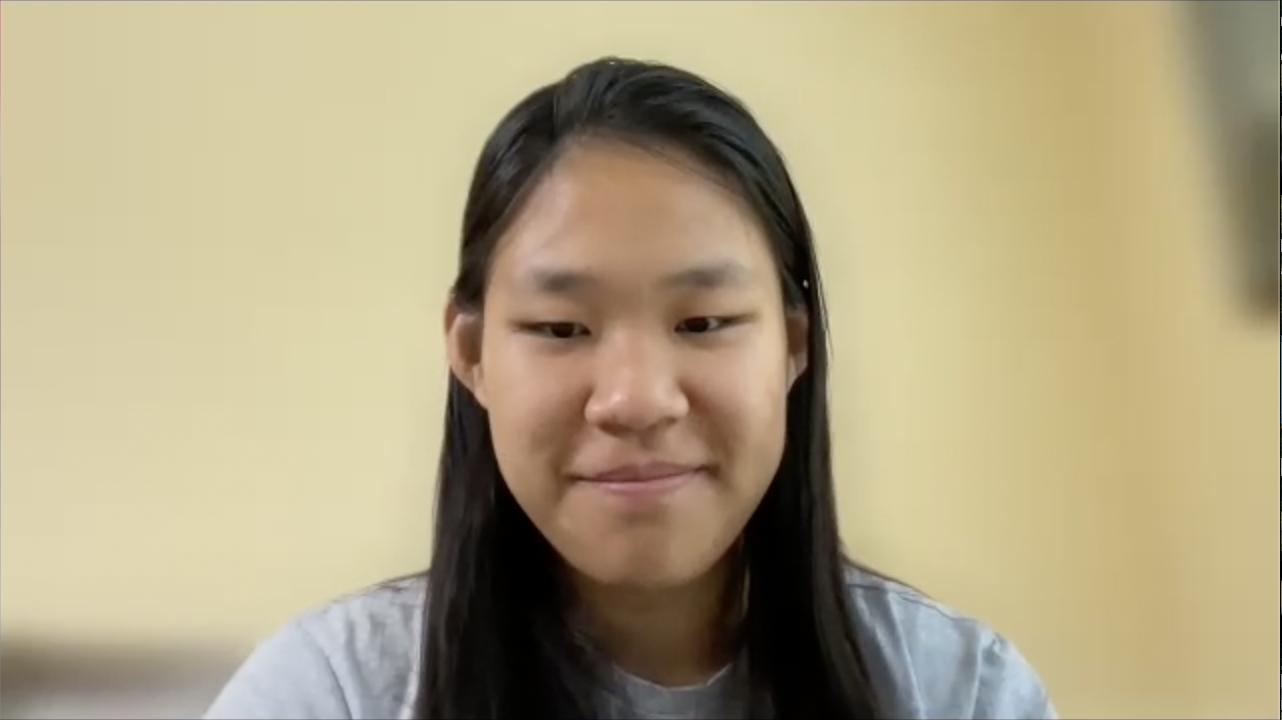
Yeah, hi, my name is Emily Kim. I'm studying material science engineering. I'm going into my third year now.
I'm also a student athlete on campus, so that takes up most of my time. And yeah, I'm also going to be studying my master's at the same time, so there's an accelerated master's program here in sustainability engineering. But yeah, that's my plan for the next few years.
Kathrine
So how would you explain material science and sustainability engineering to a high school student who's never heard of it before?
Emily
I would say it would be something on the lines of creating materials from scratch, basically just using chemicals and whatnot, and using chemical properties, so like changing certain properties of the materials. For example, maybe like using less of something versus less of something else, less of titanium versus less of oxygen to create sustainable materials. And that's what we continue as material scientists to explore and I guess discover also new materials for a more sustainable world, yeah.
Kathrine
So what kinds of materials are interesting you right now?
Emily
So currently I'm working on this cool seal pavement. It's a polymer type cool seal and it's water-based cool seal. In essence, it's a kind of paint that you paint onto the roads, which makes the temperature cooler.
A problem that we're trying to solve with that right now is that the overall temperature that radiates off of it is not being reduced. So instead of the pavement getting hotter, the humans that walk on that pavement feel more of the heat, which isn't our goal. And so what we're trying to, what I'm trying to do right now in my research is basically create a more heat-resistant material that we can either put into the pavement or also put it on as like a paint style.
But that's like the kind of research that I'm doing right now and that's what's interesting me right now. I don't know what I'm gonna do in the future, but I definitely wanna do something that is geared towards sustainability.
Kathrine
Yeah. So was there a specific class, teacher, project, camp or other experience that first sparked your interest in STEM?
Emily
Yeah, so I've had a lot of mentors growing up in the science fields, math fields. My teachers have always told me, oh, you're pretty much good at math, why don't you explore more science? And I think I've always grown up playing with like Legos, building like Ikea furniture.
It always like, it started from like basic, basic ideas. And my cousin once told me that you should look into engineering. And that's kind of where it sparked my interest in like maybe second year of high school.
But that's kind of where it started. It wasn't really a teacher. I think like generally teachers were like, oh, you're good at math and you have interest in science.
But I never really knew how to use that to like kind of gear it towards my career right now. But thankfully my cousin sparked this interest in engineering for me.
Kathrine
So how did you know that you wanted to study material science over other fields of engineering?
Emily
I wanted to study material science because it's not a field where you're focused on one specific thing like chem engineering or bioengineering or mech E. It's more interdisciplinary and you have like so many fields that you can go in to with just one degree. And I think that's kind of where it sparked my interest because at the moment, I'm still not sure exactly what I wanna do.
But material science has this like community and also so many opportunities that they offer me in so many different fields, even with this one degree. And that kind of led me to studying material science engineering.
Kathrine
So can you walk me through your path into your current field starting from high school?
Emily
Yeah, so I mean, high school started with math team. I wasn't really in Scioli or robotics because I thought I was gonna be a math major going into high school. And it was hard to get into like by junior year, but I was always in the math team.
I've done debate. I think it's a crucial skill to have in terms of like speaking to other people, communication, just everyday life and like stuff like that. I think debate really helped me a lot.
What else was I in? I was on the fencing team. I think having a sport also was really important.
It helped me like de-stress in those important moments in life. Yeah, I think those were the main like teams I was part of. And I think math team I was most engaged in.
Yeah, I think that was about it. I made my own nonprofit. And then I did some engineering summer programs at Columbia University.
It was with robotics. And then my second one was at actually U Penn for computer graphics. I wasn't really interested in those two.
So obviously I didn't continue off of that, but it was a really great experience to have. Yeah, and then coming into college, that's where I started to study material science engineering.
Kathrine
Awesome. So can you describe a specific project that you worked on or are working on?
Emily
Yeah, kind of like a tangent off of what I said already, but we're working on cool seal and some other pavement thermal. We're working on like improving thermal properties and improving thermal heat radiation. To put it simply, it's basically the mean radiant temperature in the pavement, which basically usually it gets reflected off of with the cool seal kind of paint, I guess.
And we're trying to improve that so it doesn't radiate off and also cools down the pavement. Which currently there's like not really a balance between the two. It's either that the pavement gets cooler, but the people get hotter or the people get cooler, but the pavement gets hotter.
So there's not really a balance, but that's what I'm working on in my lab right now.
Kathrine
Can you like tell me about the process of this kind of research? Like, are you like making random combinations and then testing them out one by one?
Emily
Yeah, so there's a few things, few tangent projects off of what we're doing right now. We're in the early stages. So right now what we're doing is creating these asphalt blocks to test in our lab for now and then get the data.
We've already put down the cool seal on the pavement in two different parks in the area. And we're currently getting data right now. There's also a problem between like going from like really cold temperatures, like freezing, and then back to thawing, like what effects that has on the cool seal.
So we're in our early stages right now, but a few ideas that we have is, I won't get into a lot of it, but like one idea that we have is changing the face composition of the material. So in essence, since there's TiO2, so we are trying to test different percentages of Ti in the material. So in TiO2, will there be 5% versus 15 versus 25?
We're currently in the very early stages right now, because this is a project led by one of my mentors that has just started, but that's like the kind of path that we're working on right now.
Kathrine
Yeah. So what lab instruments, programs, or techniques are you guys using in your research?
Emily
So one simple one is just like a hydraulic press to make the asphalt blocks, and then polymer creation. It's just using chemicals and create like these paints-like materials, polymers, I should say. And having gone really too deep into it, to be honest, they don't really allow undergrads to go and do all these experiments on their own.
And it's only been like two weeks, but to my knowledge, that's all we basically do. We have created this cart to go out and test the temperatures at the park, which we use a regular thermometer. And then we have this special equipment.
I forgot what the name is, but it tells us the mean radiant temperature. So it tells us how much heat is being radiated off of the pavement. As of now, that's all the like special types of equipment that I've been using.
Haven't been really using anything else. Oh, and I've heard that we're gonna use this machine to take like these microscopic pictures of the material and tell us what the compositions of each are. Cause like, obviously when we create these materials, we're putting in the amounts that we're supposed to be putting in, but we're not actually sure if that's gonna actually happen because of the chemical reactions.
So we have this equipment to test it out and test to see how much of the composition is like Ti versus O2.
Kathrine
So in your time there, has there been anything that went wrong or produced an unexpected result?
Emily
Yeah, so obviously I think this is the like least expected thing to happen, but our asphalt blocks that we've been making have been like slowly deteriorating, even though it's supposed to like, just stay like as a solid brick. For some reason, I don't think it's having a good reaction with something else in the lab cause there are other experiments going on. So we're testing to see if we isolate that.
Maybe it's a temperature in there. Maybe it's something else. Maybe we need to heat it up more, but that's something that we're having a problem with.
Also, unexpectedly, we're having problems with other companies because CoalSeal isn't the only company that makes this type of polymer. It's other like companies that are making it. So we're having issues with like NDA problems and like on their end, it's like they're not allowing us to give, they're not giving it to us, et cetera, et cetera.
But since we're in the early stages, there haven't been really any problems with creating anything cause we haven't really created anything much yet. But yeah, those are kind of like the few like logistical problems that we've been like having issues with.
Kathrine
So instead of describing your field generally, could you walk me through like a real day in your life?
Emily
Okay. I mean, I don't, do you mean as in?
Kathrine
Maybe like what you are doing at the lab or like? Yeah, okay.
Emily
So I mostly go through a lot of readings, a lot of research papers, a lot of research papers with my partner. That's like most of my time in the lab right now just cause we haven't done much yet. But I haven't been really doing much in the lab yet.
We've been creating asphalt blocks and we've been testing out like one coat versus two coats, but I've hadn't had really that much time in the lab. Like obviously I've experienced from my lab classes during the school year, but currently right now we're looking into a lot of different like phase compositions that other people have already tested, for example, and what has a company already tested just to see what we can avoid experimenting on if it's already something that's known and what we should do in the future with the data that we collect, which is in about two weeks, we're gonna be going out because it's raining all week. We're gonna be going out to a different park and setting up a little section for our coastal pavement.
And hopefully we'll be getting some data soon, like two weeks after that. Yeah, not much in the lab. I haven't done much in the lab this specific summer with this lab.
Yeah, I wish I had more information, but it's okay.
Kathrine
So in college, what does a material science lab actually look like?
Emily
I think it's not really that extraordinary. It's just like a regular lab that you probably see in high schools. There's a lot of different instruments to use, I guess.
But it's not that extraordinary. I think high school labs, there's these long tables, but usually there's only one long table on the middle and then tables on the side. In terms of how many people are doing experiments and what you can learn from them, I think there's a lot more you can learn because a lot of people are willing to just share what their experiments on if you just walk into the lab.
There are a lot more rules compared to a high school. There's not much. I mean, obviously other than the instruments, there's not really much that's different.
I think like high school has prepared me well for working in a materials lab. It also depends on which lab you're working at. But it looks very similar to a high school lab, yeah.
Kathrine
So next, what barriers do you think students face when they're trying to enter STEM?
Emily
I think I can say it's specifically for engineering and maybe like people going into the med school. I think people face this kind of imposter syndrome kind of thing. And also feeling like you're a lot less than others.
And I think that stigma has gone on to high school students being afraid when they're answering STEM majors. I think that there is certain amount of fear as in like you should work hard, but I don't think you should fear the idea of like working hard in that sense. Especially with engineering, I think people face a lot of depression sometimes.
And I haven't been hit with that yet. Obviously that I have had some sad moments with certain exams, but I think coming into college, I think you should appreciate the experience with your friends and join as many clubs and basically have this have fun mentality while you're working really hard. I think some other barriers some students might face, especially women in STEM, is also this imposter syndrome and feeling a lot less because there has been stigma against women in STEM fields.
But I think that like, I'm not really sure what is like, I would say maybe there are a lot more women in this field than you think there are kind of thing. There has been always talk about, oh, women are less or women are, there's not a lot of women in engineering, but a lot of schools these days are trying to fit women into their curriculum. And I've seen a lot more women engineers in my grade than I have seen like men engineers.
And there's this community to help you with that problem if you think that you are always like struggling with that problem, there are people who you can talk to. But I think those are like the main two barriers I think students face while trying to enter STEM. I'm sure there are a lot more, but those are the two that kind of like stood out to me.
Kathrine
So if you could go back in time, what advice would you give to your ninth grade self?
Emily
I think not to stress. I've always stressed like, oh, am I gonna get into a good college? Oh, am I gonna like do well in college?
I think also always kind of be yourself because obviously some people may not like what you're doing or like kind of, I guess, put down like what you're trying to achieve in a sense. And I've like felt that in the past, like people trying to like, not in the sense like be cool, but like put down achievement like your goals in order to be like going out and partying kind of thing. And I think I've like felt that and that's resonated with me a lot.
But I think like always working hard to reach your goals is one thing. And then also don't be afraid of what the work that you put in. And also don't be afraid of going, like trying to get into a good college.
Like obviously I'm grateful to be here, but if I wasn't here, I would understand that there's like other schools that were better fit for me. I think my dream school was MIT, which honestly I think I would have hated if I went there. And there was a good reason for MIT to reject me.
I don't think that like, I think if I went there, like I would have a really hard time just like my other friend is having like a little bit of a hard time. I'm more of like a laid back type of person that like wants to go off and do their own thing and also work hard for their academics as well. But I need that balance and MIT may not give me that balance that I want.
Same with other schools, like various other schools that I want, like Stanford, et cetera. But like, I think coming to UPenn has like made me realize that there's like a reason that you get into a certain school and you don't have to stress. Like, even if you do stress, I don't think it'll like help you.
I think like having more fun while you're going through the process throughout high school, throughout college, like enjoy the time that you're there and don't stress about anything. Unless it's like the present moment kind of thing.
Kathrine
That's really good advice. Our school guidance counselor is always saying like, if something like doesn't accept you, then that's their loss and not something that you should be worried about. Exactly, exactly.
So what is one small step a student could take this month to explore your field?
Emily
I think there's a lot of research out there. People can read a lot of research, but obviously I don't even like reading research papers. So I think maybe doing some experiments, I don't know, at home, like on YouTube videos, like slime is like not to be like ironic or some like being that like one teacher, oh, like doing something fun is like how you should explore stuff.
But like making slime is like one of the first things that I've learned in lab. And it was like, why am I making slime? But there's like a lot of properties in slime.
And maybe like, I don't know if you heard of like oobleck, like that liquid where you slime it really hard. But like honestly making slime, making oobleck and like just exploring the material properties of that. Like there's always something that you can explore in terms of materials, like anywhere in your home as well.
It's literally all around you. Like the bricks, the table, the glasses that I have like made out of certain plastic, stuff like that, like headphones even. It's always around you.
So like have fun and like maybe watch YouTube videos. Maybe that's how I can explore my field. I haven't had that experience in the past, but that's something like where I would start if I were like someone who was like completely new to material science engineering.
Kathrine
Oh, I mean, I love slime. So I love that as well. Okay, so that's all my questions.
Thank you so much for taking the time to share your experiences and I really appreciate it.
Emily
Thank you for having me.