Yale Mathematics and Computer Science Major Kevin
Kathrine
Thank you for joining me today. Would you mind introducing yourself and your field of study?
Kevin
Yes, so my name's Kevin and I'm going into my sophomore year at Yale where I'm studying math and potentially getting a dual degree in computer science as well.
Kathrine
Awesome, so how would you explain computer science and mathematics to a student who only knows them as high school subjects?
Kevin
I think in college, math and a lot of math classes, once you go past calculus, are like very proof-heavy. And you're not dealing with a lot of, at least the classes that I've taken so far, I haven't dealt with a lot of actual numbers and it's been mostly proofs and a lot of logic and definitions and stuff like that. Computer science, at least coursework-wise for me so far, has just been a lot of introductory courses, like the intro class at Yale and then data structures and algorithms, which is just, if you know what LeetCode is, it's like that.
And yeah, but outside of that, in regards to math, I am part of the club at Yale that runs the math competitions for high schoolers. And then CS-wise, I work in a bioinformatics lab where I write a lot of code.
Kathrine
Oh, that's really cool. Was there a specific class, teacher, project camp, or other experience that first sparked your interest in STEM?
Kevin
Not really a specific one. I think math is just something that I did a lot of throughout my whole life. I'm sure a lot of kids have this experience where they do math competitions when they're a kid.
And then when you get to high school, you have access to all these math camps and dual enrollment classes and whatnot. And that was kind of how it was for me as well. So yeah, I was just doing a lot outside of my schoolwork in high school in regards to math.
And then computer science is, I took a few CS classes in high school and it's just really fun to make stuff. And that's something that math doesn't really afford you. So yeah, that's just like a side thing.
Kathrine
So can you walk me through your path into your current field, starting from high school?
Kevin
Yeah, so in high school, I came into high school just being a little math nerd. And then in high school, I joined some science clubs because there wasn't really a super active math team or anything at my high school. So I joined Science Olympiad and Science Bowl and then I got a lot of exposure to biology and chemistry, which I wasn't the best at them, but I was good enough where I got put in some biology and chemistry events in Science Olympiad and I really enjoyed them.
So now in college, I'm kind of taking that and going along the same vein. I'm working in a bioinformatics lab where most of the reasoning I have to do is still like very math and stats heavy or like computer science heavy, but there's like that kind of added flavor of biology, which is something I enjoy.
Kathrine
So how did you decide to study both CS and math in step just one?
Kevin
Oh, well, I mean, like I knew I was gonna study math and then like I'm still debating whether or not to add like a full CS degree because that's a couple of classes that I maybe don't wanna take, but yeah, I think just like CS is very cool. You can build stuff. It's easier to get a job with.
So yeah, that's why.
Kathrine
Are you already on track for that CS degree as well?
Kevin
Yes, I am.
Kathrine
Oh, awesome. Can you describe a specific project or a problem you worked on?
Kevin
Sure, yeah. So when I was in high school, during one of the summers I had in high school, I went to this math program in Massachusetts and then I did a lot of math, obviously. And then towards the end of it, one of the problems that they gave us was, it's called the Banach-Tarski Paradox where it's like the idea like you have a sphere which is like the set of all points that are whatever, right?
And then there's like using like under measure theory, you can figure out a way to split up the points in the sphere into like a finite number of subsets and then rearrange them so that you get two spheres that are both the same size as the original sphere. And it like makes no sense obviously, but just like under like measure theory in math, there's a way to do that. And then I spent like, me and my friend at that program spent like three days trying to figure out like the way that you split it up and rearrange them.
So that was a lot of fun. And I think it's like a lot of math, like once, especially once you get higher than like little high school competitions, it's like it's a lot of like creativity as well and like a puzzle almost. So it's just really enjoyable to go through that.
And that's why I like math.
Kathrine
Did it require like more persistence, teamwork or technical knowledge than expected?
Kevin
Oh yeah, definitely. Definitely a lot of persistence. And I think teamwork, it's really good to have like friends or people you can do these things with just to like, just so like you have somebody to bounce ideas off of.
And just so it's like, if you're spending that much time working on something, you might as well do it in the company of somebody that you like being around.
Kathrine
Yeah, so instead of describing your field generally, could you walk me through a real day in your life?
Kevin
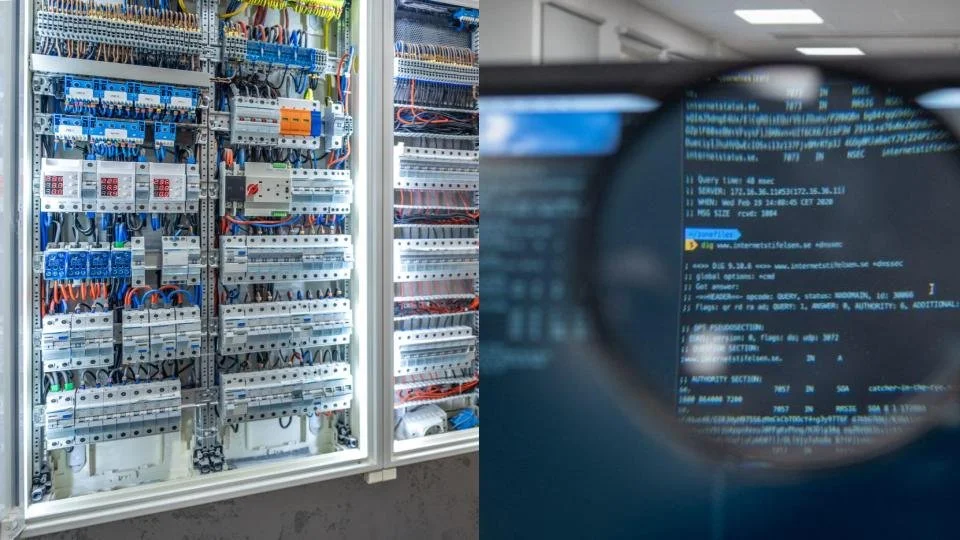
Yeah, so right now I'm working at the lab this summer. So it's pretty much, it's not that interesting. It's like I wake up, I log into the labs, like clusters it's called, with like it has like Linux and GPUs for training jobs.
And then I check to see if my training job from yesterday has finished running. And then if it has, then I can run like tests on it or I could run like, yeah, I can run tests on it. And if it hasn't, then I have to wait.
And then after I've done that, either I've run tests or I have to wait. Then I just like, I go do other stuff, which is either, normally it's either like finding papers that contain datasets that we could use, or it's just like, I like do my own projects or I just go like play, yeah.
Kathrine
So which part of your day is the most exciting versus which part of your day is like the most frustrating or repetitive?
Kevin
I would say like waiting for training jobs to run. It's definitely very, it's not frustrating, but it's boring. And if anyone's like thinking about going into like machine learning research or like data science research, that's something that you're gonna have to like do a lot.
Obviously you can like find things to do in the meantime, but like still, you know. And the most exciting part is probably just like, like after the job runs and like, you can see like it's performing better than before now. So that's fun.
Kathrine
And during the school year, how do you balance your double major with the rest of college life?
Kevin
Oh, I think just like having, well, I don't wanna say like don't sleep, but like also like having like blocked out times and like just being very good with time management. I think also like in high school, I was very neurotic about like being a perfect student and whatnot. And I think in college, it definitely matters less.
And like, I think people in general will both be happier and more successful if they rather than like spending all their time doing like studying, they go out and like make friends or play or like, you know.
Kathrine
Yeah. So what do people often misunderstand about your field?
Kevin
I think on like a, this isn't really about like math as a major, but I think like math as a subject. People, I think, especially in America, people, like they tend to just kind of like hand wave it as like, oh, I'm like so bad at math. Or it's like, it's not my subject.
Like, I mean, like they have to like take out their phone to like calculate like a Tibetan restaurant, right? And I think like basic arithmetic, it's like something that you're taught alongside reading in elementary school, right? And then illiteracy is obviously like frowned down upon, but then like not being able to do some like basic arithmetic is somehow not given the same kind of stigma.
And I think that's something that a lot of people get wrong. I think it's very important to be able to think about numbers, at least on a basic level.
Kathrine
Yeah. So what's one thing you wish high school students knew before deciding whether they like CS or math?
Kevin
I mean, I think something that I wish I knew would be that it doesn't really matter like what you decide in high school. Because once you get into college, there's a lot of room to pivot. I think like nationally, like most college kids will like switch majors at least once.
Kathrine
Yeah.
Kevin
And like, maybe like, like maybe being like super into CS in high school will give you a little bit of an edge at the beginning of your CS major, but like towards the end, it's like, it won't have mattered that much. So you're just like, I don't really don't worry about it too much in high school, just like enjoy high school more, do whatever you like, and just build like good study habits and time management habits in general.
Kathrine
So what barriers do you think students face when they're trying to enter STEM?
Kevin
I think for a lot of like STEM subjects, people will avoid them if they think, or because they think they're like too hard to get into. Right. I think like, like a lot of like pre-meds who I talked to, for example, they like completely avoid adding math classes higher than like Calc two, because they think it's too hard.
And I think like for me in high school, I, even though I had no like biology background, I still just like, I tried out for some biology competitions for science Olympiad, and I just ended up studying a lot of it. I think for like everything, including STEM, you can just like, you can just like learn as you go and like just try things out instead of just like avoiding it completely.
Kathrine
Are there any free or low cost resources that you recommend?
Kevin
Yeah, I think MIT OpenCourseWare is pretty good for a lot of math subjects and a lot of computer science subjects. You can definitely find a lot of textbooks online for any math class. Yeah, that's all I can think of.
There's just a lot of free stuff online.
Kathrine
Yeah, and I know you've already given a lot of advice, but if you could go back, what specific advice would you give your ninth grade self?
Kevin
I would say just like focus less on academics, just like enjoy life more, enjoy high school more, be more like, I would even say like, because I swam, but I wasn't like very focused on it. Like focus more on, like a little more on swimming than you are right now. Yeah, that's pretty much it.
Kathrine
Is there anything you wish you had started earlier?
Kevin
I wish I had started coding like earlier, not like, like I did do like competitive coding in high school, which is like the leet code style problems and also like what they teach in data structures and algorithms. But I wish I started coding like real like websites and like apps earlier. I think a lot of the time, like getting started with that and like looking at all like the API calls and whatever, it can be very daunting, but like if you wanna go into CS or like software engineering like that's something you're gonna have to learn eventually.
So you might as well just do it now. And you also get to like, just like build fun stuff along the way.
Kathrine
And is there any advice that you hear often that you disagree with?
Kevin
I think this is not really advice or it's like kind of advice but I think a lot of people online, they'll say that, like leet code is like dead or whatever, or like leet code is like a horrible like filter for jobs, but, and they'll tell you like not to like study it. But I think that's not true. I think you should study it and it is a good filter for jobs.
It's a good filter for jobs because like people who are good at leet code are either like smart or hardworking or both. And that's like, so like it's a good thing to filter out the people who are neither smart or hardworking. And then it's like a good thing to study because I think like doing things like leet code and math, they teach you to think about things like, sorry, they teach you to think about problems very rigorously, which is like a good thing to have in life in general.
So yeah, even though it's like boring sometimes.
Kathrine
So what's one small step a student could take this month to explore your field?
Kevin
Just like do math, like look up some like basic like math proof techniques and try to like do them on like abstract problems. I think when I was like learning proof techniques, one of the first like one of the proofs I did, a lot of them weren't even like math. They were like, you have like people like throwing water balloons at each other, like proof that if you add another person, like whatever changes, right?
So yeah.
Kathrine
So that's all my questions. Thank you so much for taking the time to share your experiences. I really appreciated it.
Kevin
Yeah, for sure.
Kathrine
Okay, thank you.
Kevin
Yeah, you have a nice day.