“Spotlighting the real, unfiltered stories behind STEM careers so students understand not only the science, but also the life.”
Mission Statement
I’ve always been passionate about and fascinated by what STEM has to offer, but I noticed a pattern amongst students like myself. Although we’ve been exposed to interesting knowledge, experiments, and clubs at school, we often have limited access to what a real career in STEM looks like.
I got my first glimpse of life in STEM at a summer camp. There, I got to hear from real professionals about daily life as a STEM researcher, the newest cutting-edge research and tech, and the challenges they faced along the way to their careers. Their wisdom, passion, and journeys made me even more determined to pursue STEM. However, I realized that most people don’t have those same opportunities.
I was motivated by this gap to start the STEM Stories Project, which documents real STEM journeys. This growing collection of stories from undergraduate students, graduate researchers, professors, and professionals is a resource for students seeking insight into the reality of STEM careers.
— Kathrine, founder
Why We Started This Project
65+ Interviews
15+ Universities
Featured Videos
Kathrine
Thank you for joining me today. To start, would you mind introducing yourself, your field, and the main question your research group studies?
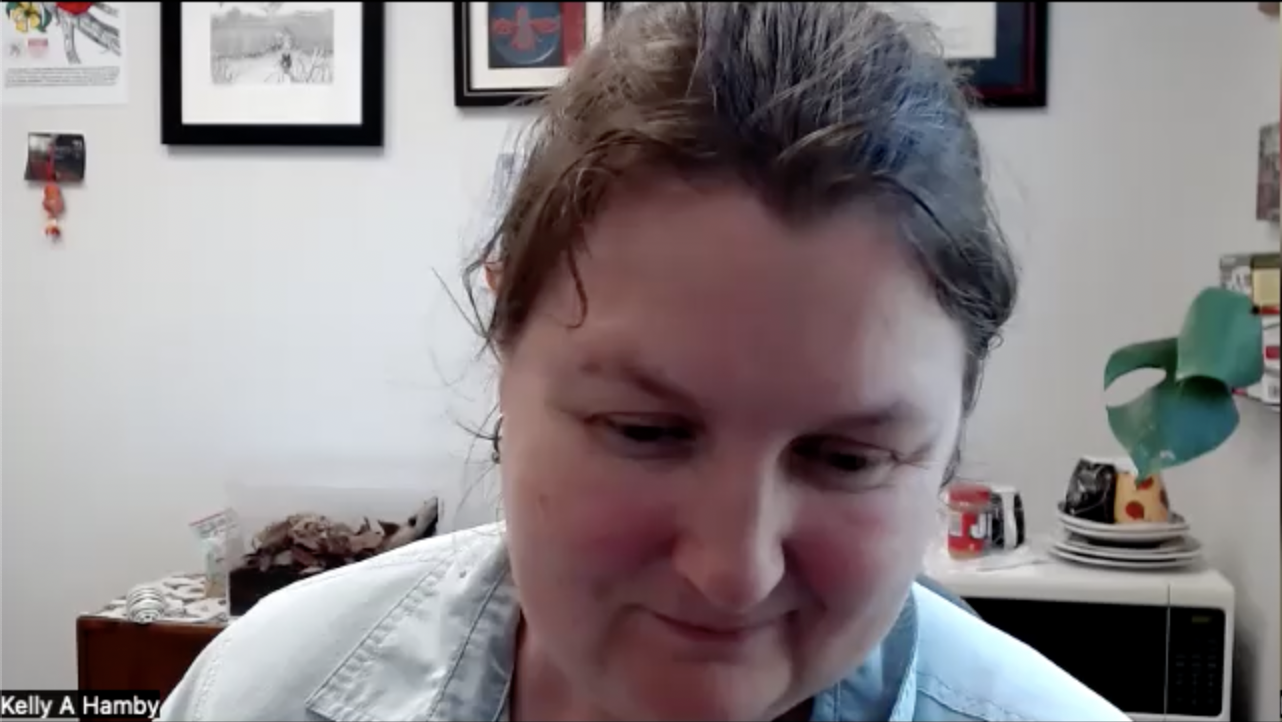
Professor Hamby
So I'm Dr. Kelly Hamby. I'm an Associate Professor and Extension Specialist in the Department of Entomology here at the University of Maryland. So my major field is entomology, so that's the study of insects, and the main questions that my research group focuses on is how to improve sustainable pest management in agroecosystems.
So we work in a lot of different agroecosystems with primarily insect pests, but also sometimes dazzling and other types of pests as well.
Kathrine
So what is integrated pest management, and how is it different from simply trying to kill pests with huge amounts of pesticides?
Professor Hamby
So integrated pest management is what I like to call it is a science-based decision-making tool. And the goals of integrated pest management are to maximize our yield and our ability to feed the world and have food and fiber crops, as well as profitability for the farmer, while also protecting environmental and human health. So typically this is done by using multiple tactics rather than one kind of silver bullet and trying to balance the pros and cons.
And then the question, how is it different from simply trying to kill pests? That's one of the major things when we say management, and actually it's even something that cancer doctors are thinking about too now, where do you have to get rid of every single cancer cell? Probably not.
You want to have it at a manageable level to where it's not causing damage. And some insects are out there and they're really not actually causing damage. So being able to recognize when is it a problem, when is it not a problem?
It's really the first step in integrated pest management.
Kathrine
So thinking back, what first made insects, biology, agriculture, or ecology genuinely interesting to you?
Professor Hamby
Well, you know, I think most people when they're growing up, they'll maybe like the outdoors or they like finding critters. I think as entomologists, we've noticed younger people tend to really enjoy interacting. And then somehow people are cultured about that being that critters are icky or they're scary, which is not necessarily the case.
So I was one of those, and it's true, I think of many entomologists, I was one of those people who was outside catching bugs when I was little. But I really solidified wanting to do entomology later in my studies because I did my bachelor's degree in environmental toxicology. And I was working in an aquatic toxicology lab that was studying how pollutants, including pesticides, were impacting aquatic organisms.
And a lot of toxicology is, it's really the study of what are the effects of these xenobiotics or chemicals that are not necessarily found in nature or in your body, right? And in doing that, I kind of realized, and this person who became my PhD advisor, Dr. Frank Zalem, he had worked with this aquatic toxicology lab. And a lot of his work was working to reduce pesticide inputs in almond orchards.
So he'd really managed to make the products that they used less toxic, the amount of products that they were using lower, and also worked on some things like growing grass underneath the trees to help reduce runoff, to really reduce that problem. So I was interested, that's when I first really became interested in flipping and thinking about how can we stop these from pollutants getting into the environment versus what are the effects of these pollutants on the environment.
Kathrine
So I guess that leads into our next question, which is, what is a specific research project that your group is working on right now, and what are you trying to discover?
Professor Hamby
Okay. So we have multiple research projects going on. I think that one, there's a couple of them that I'm finding really interesting, and I think that one that you might be interested in is, and as I mentioned, I work, I'm not commodity specific.
So my job in some places would have a specific clientele that I'm supposed to work with. Maybe that is corn and soybean farmers, or maybe that is whatever it is, but I'm not commodity specific. But I choose to work because Maryland produces actually a lot of corn and soybeans.
So I choose to work a lot with corn and soybean growers. And I also work a lot in small fruits because my PhD was actually on Spauda and Drosophila, which is a major pest of small fruits. And I'm also working in sweet corn.
But currently in corn and soybeans, so you may or may not know this, but Maryland corn and soybeans, they're some of the earliest adopters of no-till agriculture and also of cover cropping. So both of those practices have some benefits for reducing nutrient runoff to the bay. So they're trying to help phosphorus and potassium and things like that from getting, and nitrogen from leaving their fields and moving into the bay by having this cover crop.
So they're growing plants over the winter to suck up nitrogen, to build up biomass and organic matter and keep things from leaving the field. And then they're also reducing how much they're tilling over the soil. So there's less soil erosion and there's less movement of soil off their fields as well.
And so they have been doing this in this area for a very long time comparatively, and it's starting to diffuse throughout the United States, but it was really first worked out how to do it. And our farmers really figured out how to make that a profitable system, especially for corn and soybeans. But that system produces a lot of soil residue.
So you have a lot of plant material decaying on the surface of the soil. And what we've found actually is that that residue seems to foster a totally different pest complex to some degree. So one of the issues that our corn and soybean farmers face in these no-till systems is slugs.
So there's a couple of species of slugs that can kill the seedling of the corn and the soybean. And it's more of a problem in soybeans because soybeans, their growing point is above the ground. And if a slug kills the growing point, then the whole seedling dies pretty fast.
Whereas corn's growing point is actually below the ground, and they're less likely to kill the growing point in a corn plant. So slugs are a problem. Slugs are not an insect, but there's these ground beetles that feed on slugs.
And so that's how a lot of entomologists got involved in doing slug research. And so I'm part of a big collaborative effort to really try to understand how many slugs is too many slugs? How do we monitor slugs?
What are some of the things that we can do to manage slugs? So right now, the only thing that you can do is apply something called slug baits. So they are pesticides.
There's different active ingredients. Some of them are somewhat toxic and of concern for wildlife and humans, and some of them are less so. But they're all expensive.
And they're hard to use well to control slugs. But that's the only thing that we know for sure is effective at this point in time. And we're also not sure when and why we find really damaging slug populations and trying to predict that.
And so some of the things I've been thinking about is that we have two different species in Maryland, which is not necessarily true throughout everywhere. So we have both the marsh slug, or Duroseris laevi, as well as a gray garden slug, the Duroseris reticulatum. And it's possible that one of those slugs versus the other is more damaging.
That's one of the things that my lab is trying to understand. Actually, my research technician is currently doing a study in the growth chambers where he's comparing the damage of those two different species. And he's looking at different amounts of residue on the surface of these little, we call them mesocotoms.
So he's got basically a tray of soil with soybeans and cover crops inside it, or cover crop residue inside it at different growing conditions to see what the impact of slugs is on those plants. So we're just trying to understand in what situation are they killing slugs? And we've done a lot of work in the fields to try to understand that, try to correlate the populations and the damage to one another.
And that's what the big collaboration, that's one of the things that we're looking at. Slugs are so patchy and the data is so variable that it's really hard to really pin down. Sometimes lots more residue means more slugs, sometimes more residue doesn't necessarily turn up showing as many slugs as it.
So trying to figure out what's going on has been tricky. And so that's why right now we're doing a greenhouse study, well a growth chamber study.
Kathrine
I can definitely relate because my mom's vegetable garden in our backyard is also overrun by slugs. And it's very labor intensive because it's fairly small, so she is kind of able to go through each plant and pick them off one by one. And she also has this sulfur mix that she'll sprinkle around, which I guess has kind of been helping.
But I kind of just look at the plants and half their leaves are missing. So it's a little unsettling, I guess.
Professor Hamby
No, it's amazing. And that's what makes a pest, right? It's something that's going to consume a lot of area of the plant or cause damage that's really killing the plant.
That's how you know it's definitely a problematic organism that you're going to need to do something about. Yeah.
Kathrine
So next, could you walk, I don't know if like your field is very conducive to this, but could you walk us through one completed experiment field study or discovery? Okay.
Professor Hamby
So I'm going to switch a little bit gears to speak about a different insect that I have studied for a long time. So rather than telling you about one study, I will kind of tell you the path, the things that we've looked at and worked on and tried to figure out as a research community. So it wasn't just me by myself.
That's the other thing about my field. A lot of times we are working in interdisciplinary teams to try to solve the problem from multiple different angles, which is Spido and Drosophila. So it is related to the genetic model organism Drosophila melanogaster.
It's a very small little fruit fly. So same size as those that you'd find flying over your fruit bowl at home. And it was an invasive pest that invaded and came to the continental United States from Southeast Asia.
And when it first started invading, the first thing we needed to do figure out is how is it going to behave in this new environment? Is it the same as what people in Southeast Asia were seeing? And how is their production system different or the same as ours?
And what knowledge can we translate from what they've been doing? So we collaborated a lot with scientists in Southeast Asia to ask them, well, is this a pest in your systems? Why is it a pest or not a pest?
And what's different? And to start to figure out, so the first thing that I worked on in my PhD is how do we monitor this pest? How do we determine that it's in our field?
So we were comparing different baits and we know that they're attracted to rotten and fermented fruit. So we were basically mixing yeast and sugar and water to make sort of a fermenting bait. And then we were also using apple cider vinegar because apple cider vinegar is a fermentation product that smells a lot like fermentation.
And those are some of the earliest things. And we know that they're attractive to other Drosophila. So that's where we started.
And as you can imagine, that has now progressed to where you can buy a commercial lure that produces those smells and you can hang it over soapy water, which is nice because it's a lot clearer and a lot less goopy when you're trying to look at the insects inside them. We've also been, as a field, trying to make those traps more specific so that you don't have to look at every, because you're going to, in this case, there's lots of things that are attracted to fermentation. So you get lots of other insects in your trap too, which is non-targets.
You don't mean to catch, which is a problem for that reason. But also if you're a farmer and you're trying to find a small fly in a sea of insects, it's not that easy to use. So there's been a lot of work to try to develop something that's a little bit more user-friendly.
And then also colleagues have developed the other thing that you can do is you can monitor for the larvae in the fruit and how do you make it easier to see whether the larvae are in the fruit or not. And so this case, what you do is you slightly crush up the fruit and you put them in a salt or sugar water solution, which makes them float out. They leave the fruit and that makes it easier to find them.
So that's an easy way to tell, oh, I have a problem or I don't have a problem. And it's time to start managing this pest.
Kathrine
Yeah. So I actually did some light research on these fruit flies. And I guess the whole problem with this versus the fruit flies that have already been here is that they'll eat fruit that hasn't rotted yet.
Is that correct?
Professor Hamby
That is correct. So they have the females, their egg-laying structure or ovipositor is serrated like a bread knife. And so they can actually cut through the skin of a fresh or ripening fruit.
And they actually do prefer like that. That is their niche, a fresh and ripening fruit versus an overripe fruit. But I like to put them in the context of the other fruit flies because they will also use overripe fruit.
They just prefer ripe fruit. And that's why they're causing direct damages because they're directly laying imperfect fruit, their eggs.
Kathrine
So I guess moving on from a research perspective, what does a typical day look like for you? And how is your time divided between teaching, fieldwork, lab work, meetings, and mentoring students?
Professor Hamby
Well, I'm going to walk you through today because it's the one I can remember, but I'll also give you kind of more generally. So today I started, we started at seven o'clock, me and one of my undergraduate researchers, we got in the truck and we drove over to the Y Research and Education Center in Queenstown, Maryland, where we are monitoring for slugs. Well, actually at this point, we just finished the last sampling.
So we monitor for slugs for up to six weeks after planting in soybean fields. So we reached our sixth week after planting. So we monitored for slugs.
And then we actually converted our slug traps into something called a soapy water trap, because as I mentioned, my research technician needs slugs for his experiment. So we've been catching slugs and bringing them back to the lab. And we have a slug colony that he's been using to do those greenhouse, those growth chamber experiments.
So then we, so we caught some slugs first thing this morning. And then I'm also collaborating on a project. So a piece of my research.
So I mentioned I'm an extension specialist. So I teach graduate students. I teach undergraduate students, but I also teach farmers.
So I gave them this information that I've been developing or information that other people have figured out. So I find science-based solutions for their issues. So in doing that, one of the things is, you know, it's a two-way street of communicating, like, what are their needs?
What do they want research wise? And I try to target my program based on what is causing them issues or things that they need to know. And then I also tell them the answer and hope that they're going to change their practices and move towards adopting more IPM.
And in these conversations, you know, sometimes we're having, we're giving PowerPoint presentations or we go out to the field and we show them in the field on a field day. But this really interesting program started in the University of Nebraska-Lincoln, where instead of making it sort of this, we're teaching them an occasion. And we're also talking to them on the side, what are your issues?
They really found that framing it as a competition really gets people engaged. So right now, what we're doing is we have a farmer competition. So they get replicated plots of land on the farm and they get to choose what we do with it.
How many seeds are you going to plant? What kind of seeds are you going to plant? And then in this case, I'm monitoring for slugs.
Do they want to play a slug bait or not based on the slug monitoring that I'm doing? And I'm also monitoring for insects. Are you going to make an application of insecticide at R3, yes or no?
And they're competing for who is the most profitable, who gets the highest yield, and also who is the most efficient or who have got the most yield for the amount of input they put in. And so we think it's a really good tool for learning. They can also market their grain so that that helps them lock in different prices depending on the day.
So it's basically like running a farm on a very small scale and seeing how you stack up. And we think that that helps us understand what kinds of decisions farmers are making. And they also tell us what kind of choices they want to add in and things that they can experiment with.
And it gives them an opportunity to try something where they're not going to lose any money. So maybe they want to do something crazy that they would never do on their farm. So I had to go scout those fields and tell them how many insects there were.
And then we also recorded a little video to give them an update about that. Then I came back, had lunch, managed to squeeze that in. And then my master student had her first committee meeting.
And we talked with her committee about her planned research proposal for her master's. And now I'm meeting with you.
Kathrine
Wow, that is honestly like the most exciting day that I've ever heard.
Professor Hamby
Well, I have to say, we have a very high heat index this week. So it is hot.
Kathrine
Yes, I was out in the heat yesterday.
Professor Hamby
I'm in the field all week this week. It happens. So it just so happens.
Kathrine
I never imagined to be hearing about that kind of competition between farmers. But that's definitely like a very novel idea. And wow, I could never have thought of it.
Professor Hamby
And tomorrow, I'm going to our Beltsville farm. And Thursday, I'm going to our Wimrock farm. But so in the summer, I do a lot.
I'm outside a lot. Because we have a lot of field research, and we have different kinds of data that we need to collect for these experiments. So like I mentioned, we're correlating slug populations with slug damage.
So we were taking stand counts and looking at how many soybean plants were there next to these traps that we had versus the number of slugs that we've been counting in those traps this whole season. And that's for the research piece. But I also do laboratory research.
So we have a lab. And I left part of my team behind in the lab, and they were taking care of the slug colony. And what else did they do today?
They were probably identifying insects from our spotting drosophila traps, entering data, checking the data, making sure that everything looks right. We have moth traps out there. Arthur was taking down his experiment, and getting the temperature data off his data loggers.
Things like that are happening in the lab. And then as I mentioned, we do greenhouse and growth chamber experiments too. So we can have experiments going on.
And sometimes we do field experiments in the winter too. So we do have experiments going on year round. But typically right now in the peak of growing season, I'm outside a lot.
Either looking for insects to tell people, hey, you better watch out. This is starting to become a problem, or because I have research that I need to take data on that's growing out there right now. Yeah.
I was going to say, in terms of teaching, in the summer, I don't do any teaching. Because there are summer sessions, but it's my peak research season. So I don't typically teach in the summer sessions.
And then in the fall and the spring, I teach integrated pest management, which is an upper division undergraduate biology class that accounts for an upper division lab. And I teach that every other year. And so next spring, I will be teaching that.
And then I also teach teaching. It's called professional development and teaching for life scientists, I think is what it's called, to our graduate students. And I also teach professional development to our graduate students, which is a bit more about how are you going to interview?
How do you do career planning? Those types of things. And so that's also a graduate class.
So on days where I teach, the teaching, depending on what the class is, my IPM class meets twice a week for three hours. So when I'm teaching, I'm spending some chunk of my week actively teaching and then a bigger chunk of my week preparing to teach, usually, getting the lecture ready or getting the lab supplies ready, things like that. And then I have, as I mentioned, actually, I have a higher percentage of what my job requirements are, are to teach farmers and work with farmers.
So that's why some of the things that I'm doing in terms of sampling insects is directly research, where it's a question I have that I'm trying to answer, again, applied something that you growers could use. But sometimes I'm trapping them just to tell farmers, because that's part of what my job is, is to tell them, oh, you better be on the lookout. This insect is starting to reach higher populations.
Make sure you're looking in your fields. So I write articles for farmers. I also, in the summer, we have what we call field days.
So last week, I was at on the eastern shore in the evening, where we walked them through the research that we're doing on the farm. And so we walked through some blackberry and blueberry variety trials at two farms. And that was the person who was organizing it.
And I talked about blackberry and blueberry pest management, and what are some pests you should be on the lookout for at this time of year. And we looked at what that damage looks like, and how you might manage those pests. So I teach in the summer, that's what it looks like.
And then in the winter, it's a little bit more like a lecture for farmers, but it's at meetings. And this continuing education they need, because they actually have to have a pesticide license, and they have to have a nutrient management license. So they have to get this continuing education to maintain their licenses.
So I offer, I'm part of the programs that offer those continuing education.
Kathrine
Wow, I'm really glad that you're doing all that blueberry stuff, because I actually have like a ton of them in my backyard, that I planted in like these actually pretty ginormous pods. So I'll definitely take a look at the articles that you wrote about pests, although I haven't gotten any. Hopefully that doesn't happen.
Professor Hamby
No, that's the beauty of blueberries. They are difficult in terms of getting the soil pH just right to make them happy, if you can get, but if you can get them happy, I think they're one of the lower maintenance in terms of pest management crops, because they have that nice thick skin. Technically, they can get spotting drosophila.
More often, there's a couple of the June beetles, the green June beetles, Japanese beetles that like to eat the leaves and the fruit that can sometimes be a problem. But even those, I think they're not at a high enough number that it's really a big problem.
Kathrine
So my final question is, what is a realistic step that a high schooler who is interested in entomology could take this month?
Professor Hamby
Oh yes, to explore entomology, agriculture, pest management. Oh, so there's lots of opportunities out there. One thing that I think is really cool is, and I think this is true of many fields of science, is we have a National Entomological Society of America.
So that's the society for our science. They have a lot of cool resources on their website, and they also have meetings that are regional and national. So sometimes people, depending on the meeting, they host different events.
So for example, my branch, Eastern Branch, when it meets, we have something we call a Bugs World, and we put out an open, it's an event where people can just come and learn about entomology. At the University of Maryland, we do something very similar on Maryland Day. I don't know if you've been to Maryland Day, but it's an open house at the university, and our department puts on an insect petting zoo, where you can come and see live insects and talk to entomologists.
So keeping an eye out, I think, for events like that. There's a Maryland Entomological Society, and then there's also the Entomological Society that's based out of Washington, D.C., and they have Zoom and in-person meetings where people who are interested in entomology can come and hear whatever their monthly meeting is talking about. One of them meets at the Smithsonian Museum, and the other one meets, I think, at the University of Maryland Baltimore.
So you could join a group like that. It's another way to kind of get connected and learn more about entomology. In terms of agriculture, there's a lot of great stuff through Extension.
Each county has an Extension office, and they have 4-H and Master Gardener trainings, and they have different events where they're teaching people about agriculture, about entomology. They connect with local schools. So that's another cool way to kind of get involved, especially over the summer while things are going on.
There's also a lot, as I mentioned, those places also produce kind of online resources or lectures a lot of times. So the Northeast IPM Center, for example, has an IPM toolbox webinar series, and they record their webinars. So there's actually a lot of posted webinars about agriculture, entomology, pest management issues that you can find on University Extension websites.
So those are all, I think, pretty low-hanging fruit in terms of kind of connecting and learning more. And you never know, you could cold email an entomologist and ask to have a Zoom recording meeting as we answer our email. But I think there are also, you know, I think a lot of the high school programs now, sometimes we get invited to come and participate with, like, speak with a scientist, or the insect zoo travels to different schools and shows, or schools travel to University of Maryland and learn about insects.
So there are also connections that are happening within the community to connect people with these kinds of fields as well.
Kathrine
Yeah, so I think the insect petting zoo is a wonderful note to end on. Thank you so much for sharing your work and advice with me. I really appreciate your time, and I think students will a lot from hearing your perspective of what it is to actually be out there in the fields.
Professor Hamby
It's great talking with you.
Kathrine
Thank you for joining me today. To start, would you mind introducing yourself, your field, and the main questions that your research group studies?
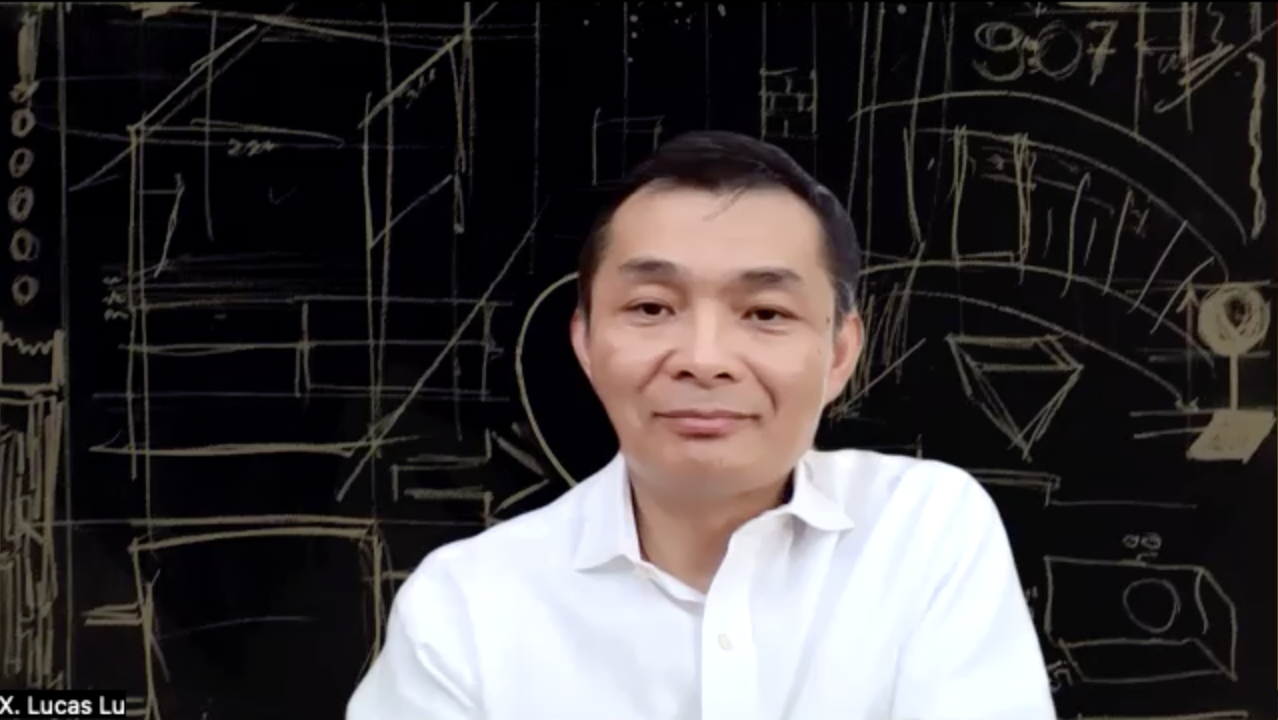
Professor Lu
Okay, yeah. My name is Lucas Lu. I'm a professor of mechanical engineering at the University of Delaware.
I'm also the director for the Center for Mechanical Research, and my major research interest is osteoarthritis and biomechanics. So for my group, I mainly focus on how we can develop new treatments for osteoarthritis and joint pain.
Kathrine
That's very cool. So how would you explain biomechanics to a high school student who's heard the term before?
Professor Lu
Biomechanics is just to use mechanical engineering or mechanics to understand how living things move and function. So actually, for our body, a lot of function and tissue are related to mechanical loading and relies on mechanical loading. For a simple example, if you want to grow taller, workout will be helpful, right?
But the question is, for the workout, if you have to pick a running marathon and play soccer, which one do you think will be better for your height?
Kathrine
I'd say maybe playing soccer. I think running the marathon might be too hard for a young body.
Professor Lu
Yeah, that's part of the reason. And another major reason is soccer is irregular impact loading, and running is a regular, repetitive loading, right? And the irregular impact loading is much better for the growth of your growth plate.
So you can get taller by that. This is a well-known factor in sports medicine. And also, another example is when you drop an ice cube on ice, the ice cube will run for a long distance before it stops, right?
Because of very low friction. But in our body, such as the joint, the knee joint, our hand joint, our temporal medulla joint, their friction is even smaller than that. That's why it can last for like 100 years without any problem.
So from these two examples, you can see why mechanical engineering is important to understand our body and to treat the disease.
Kathrine
Yeah, absolutely. So thinking back, what first made you interested in this field?
Professor Lu
Yeah, my training in college was mechanical engineering. And then I was doing undergraduate research in a biomechanics lab. And then at that time, I was fascinated to see how mechanical engineering can solve a lot of health problems.
So actually, that's where I studied to do the biomedical engineering work.
Kathrine
So can you walk us through your path from university to becoming a professor and leading your own research group?
Professor Lu
Okay, so yeah, as I said, my previous college training was in mechanical engineering. And then many, most or a majority of undergraduate students will do research in that lab. And I was doing research in a biomechanics lab.
And from there, I started to understand why mechanical engineering is important for our musculoskeletal system and our health. So I studied the research. And then for graduate school, I studied biomedical engineering, mainly focused on cartilage in Columbia University.
And then I did a postdoc training in another lab, in a different lab, which is mainly focused on how mechanical loading impacts the behavior of the cells. Okay, so after the postdoc training, I came to Delaware about 16 years ago, and I became a faculty here and slowly built my own lab and doing more research, especially on the treatment of osteoarthritis.
Kathrine
Did you always know that you wanted to go into academia? Or is that something that you decided as you were doing research?
Professor Lu
Actually, no. Even at the end of my PhD study, I was still hesitating whether I should go to industry or stay in academia.
Kathrine
Next, your research focuses on cartilage joints and osteoarthritis. So why is cartilage so difficult for the body to repair? And why is osteoarthritis so important to study?
Professor Lu
I will answer the second question first, why OA, osteoarthritis, is important. This is, osteoarthritis is the leading cause of disability among US adults. So that's why we want to study it.
And the second reason is, at a current stage, there's no effective treatment to stop the OA progression or even reverse it. So basically, the final, the common treatment is to control the pain, ease the inflammation. That's it.
And then until the joint is totally gone, the patient cannot move, the doctors will replace the joint. So that's why we want to study the osteoarthritis. And why cartilage is difficult to repair?
Actually, you may be surprised, cartilage is the simplest tissue in our body. It doesn't have a neural system, it doesn't have blood supply. So it's a very simple tissue.
But even this simple tissue is difficult to repair. One simple factor is, it doesn't have blood supply. That means it's very difficult to get nutrition, right?
And so hold the cells in the cartilage to get nutrition. It highly depends on our daily movement or daily activity. When we are loading it, such as when you stand up, you squeeze out the fluid inside of the cartilage.
So you squeeze out the waste. And then when you release the loading, the water comes back in, brings in new nutrition. That's why, you know, we are saying a proper movement or activity every day is good for the joint health.
That's part of the reason. Okay, so basically cartilage, when it's degenerated, right now, most scientists and doctors believe it's irreversible. When it's degenerating, there's no way to come back.
That's why it's difficult to, you know, difficult to repair.
Kathrine
So what specific research project is your group working on right now, and what are you guys trying to discover?
Professor Lu
We, just one project, as an example, is we are trying to screening thousands of FDA-approved drugs. And see, those drugs are all kinds of different drugs to treat all different diseases. But we are screening them to see which drug is beneficial to osteoarthritis or joint health.
And then we will see whether we can repurpose these drugs for the treatment of osteoarthritis. So the benefit for repurposing is, it's already FDA approved, that means we already know a lot about the drug's safety and its features, and what it does to our body. So in this case, it will be much, it could be much faster than develop a brand new drug.
Kathrine
Yeah. Yeah.
Professor Lu
In this area, if when we want to develop a new small molecule compound, usually it will cost two decades and billions of dollars. So repurpose an existing drug, could it be more efficient to do it? So that's an example of a project.
Kathrine
Could you walk us through one completed experiment or discovery from your research?
Professor Lu
Let me think about it. Okay. So one experiment is in, I think in 2021, about five years ago, the chemistry Nobel Prize goes to clinical chemistry.
So this is a new technique or new reaction between different molecules. So one experiment we developed is, we use this technique so that we can evaluate or measure how fast the cartilage cells build up new protein or new cartilage, and then how fast they degenerate or degrade older proteins. So with this method, we will know which drug can help us generate a new cartilage faster and slow down the degradation of the older cartilage.
Kathrine
Okay.
Professor Lu
So that's one experiment we are doing right now.
Kathrine
So next, what does a typical day look like for you? And how's your time divided between teachings, meetings, writing, and lab work?
Professor Lu
Okay. No, there are no two days identical. So it's always like a mix.
But I have to say, most of my time, especially during summer, are focused on research. By talking about research, I have to write papers, write proposals, and then talk with the students about their current research and how to move forward. So that's pretty much what I'm doing for research.
And during the semester, I also have to teach. And so that will take me like about 25% to 50% time during the semester for teaching. And another big portion of my effort is a service, such as, well, I mean, talking about a service is such as I have to serve on the graduate curriculum committee in the department.
You have to serve as the director of the CBER, you know, all those services. So that's what we usually do every day.
Kathrine
So you mentioned earlier that you didn't decide until basically the end of graduate school to go into academia versus industry. So ultimately, how did you make that decision?
Professor Lu
Well, this is a bigger question. Actually, I talked to many different people, my friends, my mentor, and my family. And eventually, what made me to make this decision is I asked myself what I really want to do.
You know, sometimes it's not that clear. Sometimes we want to, we think we need, we have to survive, we need money. Sometimes we think we, I like science, I like teaching, or, you know, I like interaction with the people, right?
So all those are different things. And which one is the top priority? And which one should be the most important?
When we decide our career path, different people have totally different answers. So eventually, what I asked myself is what I really like. My answer was, I like teaching.
I like working together with students. And I also like to solve new problems with new knowledge. So I picked this direction.
Kathrine
Yeah. So next, what misconceptions do people frequently have about mechanical engineering, biomedical engineering, or biomechanics?
Professor Lu
Okay. So for this area, actually, it's a typical interdisciplinary area. So it requires a collaboration with all kinds of different scientists.
For me, such as yesterday, I was working on a project. So in this project, I needed to, I have to collaborate with a professor in chemistry. So they can synthesize new molecule drugs for us.
I have to work with a professor in biological sciences. He will use AI and a simulation to design the molecule structure. And then the chemistry, the professor in chemistry will synthesize the molecule.
And then I also have to collaborate with another professor in biology. He will test the actual activities of the new molecules. And then after their screening, they will send a few compounds to us.
I will test this on human cartilage. So yeah, as you can see, it's definitely a collaboration. And most of my projects are like this.
Of course, we also need a surgeon on the team so that he can tell us what they really need, what matters to us. So it's always a collaboration. That being said, a misconception or sometimes a misunderstanding is when you have a PhD degree or you are a professor, people may think you know a lot, right?
But actually that's not the case. We only know a tiny bit of the area. So if you ask me, okay, do you know, understand osteoarthritis or cartilage?
Yes, compared with like maybe with a high school student, I know a little bit more. But in terms of osteoarthritis and cartilage, I only know a very narrow and focused area. Okay.
So it's not like I'm an expert and I can tell you, oh, your joint has a problem, how you can treat it. No, that's not the case. Even same thing for doctors.
They only know some specific perspective of the disease.
Kathrine
So next, as the director of a research center at a university, how is your work different from just being an individual professor leading one lab?
Professor Lu
As a professor, I have to teach, I have to mentor my own graduate students and do the service. As a center director, one example I give you is recently we just received a grant from National Science Foundation as the center. So the grant will sponsor us to recruit undergraduate students across the country to the University of Delaware.
And then we will assign each student to a lab in the center so that they can do full-time summer research at UD. Of course, the grant will support their housing at Delaware and also provide a stipend to cover the living expense at Delaware. So yeah, that's kind of what we do, I do as a director.
And also another example is we have a minor degree in the department called biomechanics. So we have to help the undergraduate students for the curriculum selection and to guide them how to complete the requirements for this minor degree.
Kathrine
And what is one realistic step that a high school student could take this month to explore biomechanics, biomedical engineering, or mechanical engineering?
Professor Lu
Well, there are actually mechanics is everywhere in our daily life. One simple example is I don't know whether you have paid attention to the material and the pattern of the bottom of your shoes. When you go hiking, you wear hiking shoes.
When you go trail running, you have trail running shoes. And if you go to school, you have different shoes. And if you pay attention to the materials and structure and pattern of the shoes bottom, you will see they are totally different.
They have many different mechanical purposes. One purpose, of course, is friction. For some of them, they want to provide you the largest friction so it can hold you there, right, in the position.
For some of them, they want to be light enough so that you can run longer and faster. And for some of them, it's really kind of thick and heavy. So it's really strong so that it can protect your ankle.
So if you pay attention to the pattern, you will see why it's designed like this. So that's just a simple example. Another example is you can think about why our bone is hollow.
Why the bone is designed like this? Why not? There is a cavity in the center, right?
So the purpose, one of the purposes is the bone has to be strong enough. But at the same time, we want it to be as light as possible so we can go faster, right? So that's why it's hollow.
So when you learn, if you take such a material mechanics class in your sophomore year, you will understand why hollow is the most efficient way to design the bone.
Kathrine
That's really cool. So that's all my questions. Thank you so much for taking the time to share your experiences and your knowledge.
And I really enjoyed listening to what you had to say and I appreciate you for coming here.
Professor Lu
Sure, yeah.
Kathrine
Thank you for joining me today. To start, would you mind introducing yourself and the main problems that your field focuses on?
Professor Sunderland
Yes, hello, I'm Peter Sunderland. I'm Professor of Fire Protection Engineering at the University of Maryland. And my field focuses on anything that can protect people and property from the effects of fire.
Fire is a really big problem just in the United States. We have 4,000 deaths per year on average from fire and also $15 billion in property damage. So it's a big problem.
You can imagine even bigger globally. And as big of a problem as it is, we keep having emerging threats in fire, like data centers are a huge problem when there's a fire. They have lots of batteries and electronic and high voltage equipment.
Also, WUI fires, wild and urban interface fires, forest fires and interact with communities are a huge problem with huge losses and battery fires. So there's a lot going on in the field. It's an exciting time to be a fire protection engineer.
Kathrine
So your work on combustion and fire research is also combined with mechanical and aerospace engineering. So how do those different disciplines overlap?
Professor Sunderland
The common element there is the thermosciences. So thermodynamics, which is usually a sophomore class and then fluid mechanics and heat transfer, which are usually taken in a junior year of an engineering program. And so all those departments, fire protection engineering, aerospace engineering, mechanical engineering, they all require those three courses.
And I was an undergraduate at Cornell University. My fluid mechanics instructor was amazing. He was like a genius, didn't ever bring any notes to class and he would just get up and drive this amazing, beautiful math.
And for me, the idea that this fluid is this thing, it's kind of like a blob of mass that interacts with itself, both at the speed of sound and sometimes as slow as a snail, just got me really hooked. And ever since then, I've been interested in those thermosciences.
Kathrine
That's really neat. So next, could you walk us through one specific research problem that you are currently working on?
Professor Sunderland
So what we're doing now that I'm very excited about, I have one student here working on it, is using color cameras. So a little fancier than a cell phone camera, but basically that same idea, to take images, usually still images, but maybe even videos of a fire, and to be able to measure the temperature and the fire size and the radiative emissions, all from looking at the colors and the sizes of the flames and the embers. And so this is a tremendous increase, advance until now people had to use thermal imaging cameras for this, like the kind of cameras that firefighters use that cost two or $3,000 and they measured the thermal field.
Now we're starting to be able to do that with cameras with silicone chips, which are much less expensive. And if you think about California, they have 1200 mountain top cameras. These are just color cameras that are panning around every two minutes.
They take a picture of the entire horizon and they're using AI, which I think is great, to look for fires and look for smoke. These mountain type cameras are primarily for fire and smoke, but I think we can do better. I think with the technology that we're developing, we could improve the detection and the early response to fires.
Kathrine
So other than the color camera, what kind of tools or equipment are researchers using to study fire?
Professor Sunderland
The amazing thing about fire is that it spans from the very small, like some particles that might be 20 or 30 nanometers, which we look at with electron microscopes, all the way up to global planet scale that we look at with satellites. And so there's everything in between. Now, you can imagine burning an oil well fire or a big forest fire.
It's hard to look at that and make a lot of sense out of it because it's so big. They're from very tiny scales, like a pine needle, all the way up to the full size of the flame. So in our department, we don't have a very large region to burn.
We can burn something the size of a Christmas tree, but that's perfect for us. I love looking at flames the size of a candle flame or maybe the size of a cantaloupe. Small flames are easier to do the kind of diagnostics that we like to do.
But other people do look at large fires and some people are using electron microscopy and atomic force microscopy, all kinds of lasers. So you name it, any diagnostic that's used in any other field in engineering is also being used in fire. And we also have in our field and in our department, very advanced fire modeling capabilities, computer models of these fires.
Kathrine
So I'm curious, how do these small models, like the candle size that you mentioned or even cantaloupe, translate to like the kind of bigger fires that you might see out in the wild?
Professor Sunderland
Well, we can learn a lot about the chemistry and the chemistry in fires is different. And it's not like the chemistry that you have in your body or that you might see in a chemistry class. At these temperatures, the chemical processes are happening very fast.
And so if we can study them in something the size of a candle flame, usually you can plug that into a model that then can analyze a bigger fire like a wildland fire or the fire in your car engine. So chemistry is one thing, also the radiation, the emissions, whether a fire is producing carbon monoxide, which kills more people than the flames or producing a lot of soot, which is also a very toxic product. Those kinds of things we can do at small scale.
Kathrine
So next, some of your research studies flames in microgravity. So why do scientists study fire in space and how does it behave differently without normal gravity?
Professor Sunderland
So I used to work at NASA and you would see the astronauts, they go through so much training. But when my colleagues would come in and talk about fire, they were on the edge of their seat. They wanted to know everything about the fire risk and also our fire experiments.
And we know even from Apollo 13 that in space and spacecraft, even a small fire that wasn't that big of a fire can have tremendous consequences. Spacecraft, human occupied spacecraft are purely stranded in place. There's no, you can't call 9-1-1, no one's coming to save you.
They do often have supply ships that they can get into and escape, but really it's a defend in place environment. So we need to be extremely careful with the space environment for fire and even unmanned space, it can cost billions of dollars if you have a fire on an unmanned spacecraft. Now fires burn very differently in microgravity because there's no buoyancy.
And so a candle flame, instead of being tall and pointy because of the hot gas rising, it becomes a hemisphere. Instead of being yellow with a lot of soot inside, it becomes blue. So everything is different in that environment.
And it's been a tremendous asset to scientists to understand, to explore regimes of burning and physics that we can't access on earth.
Kathrine
That's really neat. So your work has also involved cool flames. So what exactly is a cool flame and why is it scientifically or practically important?
Professor Sunderland
So a typical hot flame, a typical flame, like a candle flame has a peak temperature around 2000 Kelvins. Cool flames have much lower temperatures as low as 750 Kelvins. So in auto engines, cool flames can be extremely important.
And by exploiting this cool flame chemistry, you actually ignite a cool flame at this low temperature that really speeds up the reaction and then has a very complete burn of the hot flame phase. And now engine makers are trying to exploit these cool flames and get engines that can increase the thermal efficiency from 35% on current cars, all the way up to 60%. So cool flames, they're not clean, they're cold.
If you burn them by themselves, they make formaldehyde and they stink. But if you can get them to work and to be controlled in the engine, now they are hard to control, then we can see tremendous gains in efficiency. And this is one reason that we're studying these cool flames.
Now, they also, we believe, have application to fires because that temperature range is really close to the temperature range of smoldering. And so if a pile of firebrands lands on your porch and you live in California, Oregon, somewhere in the WUI, the wild land urban interface, those firebrands can smolder for a long time. It's not really that much of a concern, smoldering firebrands, it would take weeks or months to burn down your house.
But if they transition to flaming, now your house can be lost in a matter of hours and there's no one there to fight the fire. So we're looking at the possibility that cool flames and that low temperature chemistry is important in that transition from smoldering to flaming in biomass fires.
Kathrine
So that transitions nicely to the next question, which is that your research also includes firebrands, aka these windblown embers from wildfires. So why are these small embers so dangerous and how can engineering protect buildings from them?
Professor Sunderland
So this is another new problem, which is part of why fire protection engineering is so exciting. People used to think, you know, 20 years ago that when the fire burned in the forest and there's a house, that the radiation from the flames would heat the house until it started to smolder. And then the flames would directly impinge on the house and burn the house.
Now we know that that might be responsible for half or probably even less of the houses that are lost in wildland urban interface fires. And so it turns out at least half, probably more, are destroyed by these firebrands. As I mentioned, they land often on your deck or your roof and the gutters.
Because of turbulent eddies, they tend to accumulate and pile up like a pile of leaves in the fall in your lawn. And then they have enough critical mass to start eating away and smoldering the substrate, the deck or your roof, until that transitions to flaming. And so firebrands really are an emerging science and important thing to understand and to protect against.
Kathrine
So what parts of a building are typically most vulnerable to firebrands?
Professor Sunderland
Well, California is doing a great job with their regulations on requiring, for example, with vented attics to put good screens up there so the firebrands can't blow in. And attic vents are designed to allow wind to blow through and cool down your attic. But the last thing you want is a whole bunch of firebrands landing inside your house, where you have who knows boxes stored up there or carpet or whatnot.
So now California is requiring screens on these attic vents for new construction. They're also requiring clearing around the house and having no mulch near the house, having something non-combustible for the first few meters near your house. And encouraging people to really clean out your dead leaves, clean out your dead branches and protect your house.
And it turns out that this does make a big difference. There are lots of things we can do to protect those houses.
Kathrine
Next, so in previous years, asbestos has been a really popular material in fire protection engineering. So now because of the more documented health risks of asbestos, what kind of materials are engineers like moving on to?
Professor Sunderland
I think we're moving over to things like drywall and cement and other ceramic materials that are completely non-flammable.
Kathrine
Cool. So next, what do students in fire protection engineering actually study and what kind of careers could the major lead to?
Professor Sunderland
Okay. So our students, we have a four-year degree. It leads to a bachelor of science in fire protection engineering.
We're really the only one in the United States with an accredited program in fire protection engineering. And they basically have two kinds of courses. One kind of course, it's not really a track, but it's kind of like a track is the thermal sciences.
So the fluid mechanics, heat transfer, fire dynamics, and fire modeling. And the other cluster of classes that they take are more of the design classes. So things like sprinkler design, fire alarm design, and human behavior, design of buildings for human behavior.
And so these are the two main types of classes that they take. And then I think you also asked what kind of employment they might get after. So probably about half of our graduates after the bachelor's degree, they go and they work for consulting engineers.
And then they design these fire alarms and these sprinkler systems and the egress systems. And they design these buildings. And some of them have really exciting jobs where they'll go into an existing building like a Smithsonian museum and try to improve the fire safety of that occupancy or aircraft hangars or prisons and hospitals.
There are very many high challenge, high difficult fire protection engineering applications. And our students really, our alums now, are really leading the industry in terms of improving that fire safety. And then a lot of our students also, they will go for advanced degrees, either a master's or a PhD, and they may go into research, they may go into education or fire investigation, expert testimony, those types of things.
Kathrine
So what kind of student would you say tends to enjoy this major? For example, are they more hands-on or is it more like coding at a desk?
Professor Sunderland
That's a great question. Fire protection engineering is more hands-on. And you see a lot of our fire protection engineers wearing a hard hat and going to a building construction zone and making sure that the sprinklers are installed right and the fire protection systems are all installed right.
So it does involve some desk work, like I think all engineering jobs, but also more travel and inspections. Of course, after a fire, if they go and inspect a fire, that's very hands-on. I think the future of our discipline and probably all disciplines is gonna be more and more computer modeling, AI and desk computer work, but there's a nice mix with fire protection engineering.
I think that most of our students are the ones that got lucky and they found out about it. So many students, they come here for a few years and they're like, well, fire protection engineering, that's actually a degree. And then often they'll say, I wish I had done that.
Some of the other programs are so overcrowded. It's hard to register for classes. It's almost getting hard to finish in four years, but in fire protection engineering, it's a well-kept secret.
We're trying to get the word out more. And usually once people hear about it, if it's early enough, like in high school in our first couple of years, they'll be very happy on our degree. Get to do a lot of desk work, computer work and theory, but also some good hands-on work as well.
Kathrine
So next, what does a typical day look like for you as a professor, a researcher and also director of undergraduate studies?
Professor Sunderland
I think being an engineering professor is one of the best jobs in the world. So you come to work and most of my responsibility, what the university wants at a research one university is a faculty with an active research program. And so that's really equal hand in hand with education.
And so I come to work and I try to solve problems and you don't wanna solve a problem someone else has done or just repeat something else. It's always about studying mother nature, discovering something new and doing that with your graduate students. So that part is super rewarding.
And then the other half of the job is instruction and education. And that too is super rewarding. Trying just once every five or 10 years to have a light bulb go off in one of my students the way it did for me when I took that fluid mechanics class at Cornell.
That's what really gets you out of bed in the morning, gets you excited to come to work, to try to share that passion for the math and science with the students and get them hooked on it the way that I got hooked at Cornell.
Kathrine
So how can interested high school students safely and realistically explore fire protection engineering or combustion science?
Professor Sunderland
So I wanna say that our department has lots of open houses and let's see, we have shadow programs. They can come on tours and visit our department but we do have online information sessions. And so they can write to me pbs.umd.edu or the general email enfp.umd.edu and we'll get them hooked up with all the right information. We even have (occasionally) research experience for high school students. Probably it's best if they live close but we've even done some that are remote. I have a high school student right now working with me that I haven't even met in person just on Zoom.
And so we offer research experience for high school students, people who are interested in this. So those are good ways to get involved. And I would say if you're a high school student don't be shy, you just gotta send the email and we love hearing from you and we'll do our best to try to hook you up with whatever needs you might have.
We even sometimes have our advisors do transcript reviews for high school students to help them with the admissions process.
Kathrine
And finally, what high school classes would you say are the most useful preparation for someone who's interested in this major?
Professor Sunderland
I would say probably your math classes, your science classes. So pre-calculus, calculus are really important for getting admitted to engineering school. Some chemistry and physics helps.
So maybe some outside projects, Lego projects, any kind of programming is really good. Writing is important. I think really history, all those things are great to help you understand how to make sense of the world and how to explain your thoughts.
But certainly it's the math that probably counts the most. And when I was in high school, I loved that math stuff. And that's the common interest we see in our students that they're all fans of math.
Kathrine
All right, so that is all my questions and also a nice place to end. Thank you so much for sharing your work and advice with me. I really appreciate that you took the time to do this.
And I think students will hear a lot from hearing your perspective on fire protection engineering and combustion research.
Professor Sunderland
Well, thank you so much, Kathrine. It was a pleasure.
Kathrine
Thank you.