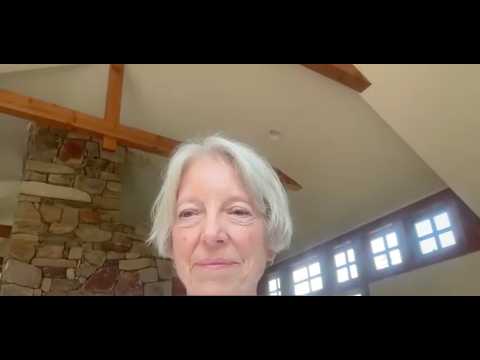
Professor Coleman on One Health and Airborne Virus Research
To start, would you mind introducing yourself, your field, and the main questions your research focuses on?
My name is Kristen Coleman and I currently serve as an assistant professor in the Department of Global, Environmental, and Occupational Health at the University of Maryland School of Public Health. I am an airborne infectious disease researcher with a special focus on the surveillance, epidemiology and transmission of respiratory viruses (e.g., influenza virus, adenovirus, coronavirus). Specifically, my research has largely involved optimizing and applying bioaerosol sampling and molecular techniques to noninvasively detect and measure common, emerging and zoonotic respiratory pathogens from multiple human and animal environments, and understanding the impact of these pathogens on public health and animal welfare.
So the main questions my research focuses on are: How are certain respiratory viruses transmitted? What is the airborne transmission potential of select emerging pathogens? And thus, what is their pandemic risk?
Can you walk us through the major events in your path from university to becoming a professor and leading your own research group?
My interest in airborne virus detection and transmission began when I was a doctoral student under the leadership of Dr. William Von Sigler at the University of Toledo, not far from where I grew up. For my PhD research, I sought specific training from scientists at CDC-NIOSH and adapted a bioaerosol sampling method to noninvasively conduct surveillance for influenza virus in the school environment. This project resulted in the first detections of airborne influenza virus in an elementary school. While presenting my dissertation research at an international influenza meeting in August 2016, I was recruited by Dr. Gregory Gray, Professor of Infectious Diseases, Duke University to manage his Laboratory of One Health Research at Duke-National University of Singapore (Duke-NUS) Medical School in Singapore, which is halfway across the world in SEA. At that time I had a pending fellowship application for the CDC’s Epidemic Intelligence Service, so in order to move to Singapore, that meant I had to withdraw my application. It was tough decision but I agreed and then underwent accelerated One Health laboratory training as a visiting scholar at the Duke Global Health Institute (DGHI) in October 2016 and moved to Singapore on January 1st, 2017. It all happened very quickly and I hadn’t completed my PhD yet, I still had another semester to go, so keep that in mind. I was hired as a research assistant in the Duke-NUS Emerging Infectious Diseases Programme. So I had to work full time and use my nights and weekends to wrap up my PhD. It was hard work but I completed my PhD dissertation on time and was promoted to postdoctoral research fellow upon my graduation in May 2017.
During that research fellowship, I had a lot of responsibility and autonomy because my supervisor worked full time in the U.S. I was entrusted to manage the laboratory, lead the team and provide expertise in conducting bioaerosol field sampling studies throughout the region. This was great because it allowed me to explore new research and respiratory virus surveillance strategies in multiple public and occupational settings in Singapore, Malaysia, Vietnam, China, and the U.S. The world was my oyster. I got the opportunity to test the capability of my PhD sampling method to be used as an early-warning tool for detecting novel virus incursions in multiple environments, including swine farms and live animal markets in Malaysia, Singapore’s mass rapid transit (MRT) network, live bird markets in Vietnam, and pediatric settings in Singapore. These studies were highly collaborative including international scholars and students, so it was a wonderful experience.
Now let’s fast forward to the COVID-19 pandemic. I was still living in Singapore when SARS-CoV-2 emerged, and my position at Duke-NUS and training at DGHI positioned me to respond to the COVID-19 pandemic while living in Singapore, so I decided to stay despite the impending travel restrictions. This was a difficult decision because of the uncertainty of it all and I was alone. My family was in the U.S. and I had no idea how long I would be stuck in Singapore. But I decided to stay and I am happy I did because I was able to conduct foundational research contributing to the world’s understanding of how COVID-19 spreads. My team in Singapore was among the first in the world to detect the virus in the air of patient rooms, which shaped pandemic policy in Singapore and throughout the world. I continued applying bioaerosol sampling methods in other clinical environments and coached research teams overseas which helped determine that the virus travels beyond two meters from infected patients, so I’m sure you remember the 6-ft distancing rule that everyone had to follow, well our research was sort of contesting that. I went on to demonstrate that talking and singing play a significant role in SARS-CoV-2 transmission. This was accomplished by sampling the exhaled breath of COVID patients in Singapore using a machine called the Gesundheit-II invented by Don Milton who is now a Distinguished University Professor at the University of Maryland.
So an opportunity opened up for me to join Professor Milton’s lab at the University of Maryland and I moved here in October 2021 and continued conducting important COVID-19 and eventually influenza studies. And then in the summer of 2023, I was selected as a KL2 Clinical Research Scholar for the University of Maryland Baltimore (UMB) Institute for Clinical & Translational Research (ICTR) and also appointed as an independent tenure-track Assistant Professor at the UMD School of Public Health and I’ve been in this position for 3 years now.
You use a One Health approach to study respiratory viruses. What does One Health mean, and why is it important for understanding viruses that can move between humans, animals, and the environment?
My research interests are interdisciplinary but all united in the concept of One Health: an integrative approach to improving human, animal, and environmental health which are inextricably linked. For example, there are thousands of pathogens that can infect people and over 60% of them originate in animals. And among new and emerging infectious diseases, that number is even higher at about 75%, and most of them are viruses. So that means 3 out of every 4 new or emerging pathogens in humans originate in animals. So understanding how these viruses are spread is very important for public health. Characterizing the airborne transmission potential of an infectious disease is crucial for assessing its pandemic risk.
What specific research project are you working on right now, and what are you trying to discover?
I am currently working on multiple projects but the main one right now is focused on bird flu in felines. So, a novel strain of bird flu has recently emerged and is rapidly spilling over into mammals. At least 74 different mammalian species have been impact, including an alarming increase in domestic cat infections in recent years. The virus is highly deadly to cats which are an important part of human life as we know and so my team is trying to characterize how cats are becoming infected and how they might spread the virus among themselves and to humans and other species. Cat-to-human transmission of bird flu has been documented three times in the U.S., including H7N2 among two veterinary professionals in 2016, and H5N1 in a veterinarian in 2024. So better understanding the transmission dynamics surrounding bird flu and cats is a major focus of my research at the moment.
Could you walk us through one completed study from your research, from coming up with the questions to the ultimate conclusion?
Sure! I’ll describe my team’s latest study. As a result of the emergence of the newest bird flu strain (known as avian influenza H5N1 clade 2.3.4.4b) and its deadly impact on felines, I was interested in finding out how widespread the virus is in domestic cats. So, for public health and animal welfare purposes, we partnered with an animal welfare organization in Tulare County, California, near the epicenter of the dairy cattle outbreaks of avian influenza in California. They offered to ship us blood/serum samples that they were routinely collecting from cats undergoing spay/neuter surgery. We then screened the cat serum samples for influenza virus antibodies to identify the proportion of cats that might have been exposed to the virus in that area. We gathered samples from 75 cats and 3 of them (1 feral cat and 2 indoor-only cats) had neutralizing antibodies against the virus. So, that means that 4% of the cats sampled in our study had been exposed to the virus. Perhaps the most interesting finding was that distance to the nearest dairy farm was a risk factor for testing positive. All of the seropositive cats were found within 2 kilometers (1.2 miles) of one or more dairy farms. Therefore, our main conclusion was that proximity to dairy farms might be a risk factor for H5N1 exposure among cats, which is an important epidemiological finding that might be useful to health agencies as they devise plans for the prevention and control of avian influenza. Our study addressed an important emerging One Health issue and highlighted a major gap in infectious disease surveillance among companion animals.
Some of your recent work focuses on avian influenza and possible spillover between animals and humans, a topic that has gained attention in the news in recent years. What do you think the general public should know about this?
I think the general public should know that domestic cats are susceptible to avian influenza virus and that it is highly deadly but survivable if treated early. So, act quickly and call a veterinarian if you suspect your cat might be infected with bird flu. As for prevention, it is highly advised not to feed pets raw milk or raw meat-based food, including some commercial raw pet foods. However, there are also other ways cats can become infected. This includes eating infected wild birds and poultry, and potentially infected rodents. Living near a dairy farm could also be a risk factor, as we have recently demonstrated. Thus, if there is an outbreak in your area, it is advised to keep pet cats indoors if possible. Cats can also spread the virus to people, so it is important to contact a veterinarian and follow any isolation/quarantine procedures they recommend. You should also contact your local health department if your cat is diagnosed with bird flu. They can offer to test your household members and provide life-saving care in the event of a spillover.
What does a typical day look like for you, and how is your time divided between mentoring, writing, researching, and other activities?
My typical day depends on the time of year. For example, in the summer months, most of my attention is on research (writing grants, submitting manuscripts for publication, supervising student research and data analysis, giving talks and presenting my work at conferences and webinars) but also some time is spent preparing to teach as the beginning of the school year approaches. During the school year, I spend a lot of time teaching which includes preparing course materials, lecturing in classrooms, and meeting with students in my office. But, I also spend time on research and making sure progress continues during the school year, as well as serving my department and university by volunteering on search committees for faculty hires. Any given day is filled with a mix of these responsibilities, so time management is an important skill to have as a university faculty member.
What is one realistic step a high school student could take this month to explore public health, infectious disease, environmental health, or One Health research?
Read! Start reading the scientific literature and keeping up with infectious disease news. Some good scientific journals to explore include any of the Infectious Diseases Society of America Journals (Clinical Infectious Diseases, Journal of Infectious Diseases, and Open Forum Infectious Diseases). The CDC’s Emerging Infectious Diseases journal is also a great one, as well as a journal called One Health. As for timely and digestible infectious disease news updates, the Center for Infectious Disease Research and Policy (CIDRAP) at the University of Minnesota is a great resource. If you have social media, I recommend following their pages. I follow them on X. Reading is the best way to figure out what topics in infectious disease research you are most interested in, and identifying the corresponding authors and their affiliations on papers that you find highly interesting. These authors might not have specific opportunities for high school students but they might be open to you gaining experience in their lab if you end up attending their college or university.